From Stability to Sustainability: The UN’s Transition in Iraq
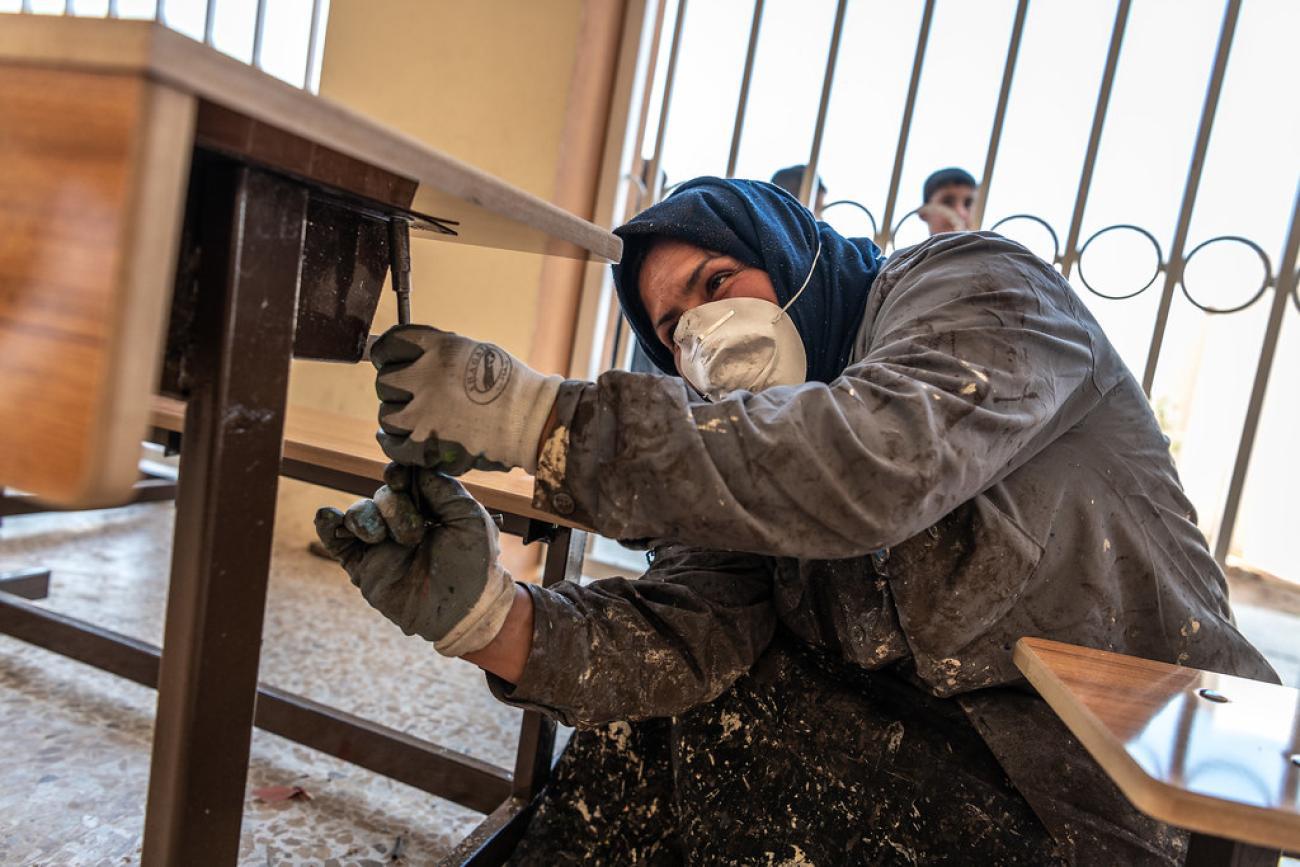
This blog was authored by Resident Coordinator/Humanitarian Coordinator in Iraq Mr. Ghulam Isaczai.
I am serving in Iraq at a moment of real transition - for the country and for the United Nations. As Resident Coordinator, Humanitarian Coordinator, I have seen firsthand how changes on the ground are reshaping Iraq’s priorities - and how the UN must adapt to remain relevant and effective.
After decades of conflict, Iraq is seeing tangible progress. Improved security has enabled nearly five million internally displaced people to return home. Economic activity is recovering. State institutions are rebuilding confidence. Regionally, Iraq is re-engaging with its neighbours. These gains remain fragile, but they are real - and they demand a different kind of international partnership.
Moving towards sustainable development in Iraq
This progress is also changing the UN’s role. As humanitarian needs decline and the mandate of the United Nations Assistance Mission for Iraq (UNAMI) concluded in 2025, the UN is shifting from a mission-led presence to a development-focused partnership aligned with national priorities. This transition has required careful sequencing, trust and close coordination with the Government of Iraq and across the UN system - to responsibly scale down humanitarian assistance while safeguarding continuity where setbacks would carry real human cost.
The result is a UN Country Team working increasingly as one. Humanitarian action, development cooperation and peacebuilding are now aligned under a shared direction, anchored in the UN Sustainable Development Cooperation Framework. The Cooperation Framework, signed recently, sets clear priorities on economic diversification, social protection, climate and water resilience, governance, human rights and the rule of law.
Central to this transformation is the Resident Coordinator’s leadership, which bridges the humanitarian, development and peace pillars. This approach ensures seamless coordination and continuity across all these tracks, promoting national ownership and preventing fragmentation during sensitive periods.
United for impact
Financing is central to this transformation. As Iraq moves beyond traditional aid, the focus is on unlocking more predictable and sustainable financing - through closer engagement with international financial institutions, development banks and the private sector. The Government’s openness to pooled funding under the Cooperation Framework reflects growing confidence in a more coordinated and accountable UN Country Team.
This coherence is already delivering results. In social protection, agencies are aligned behind a single, nationally led strategy. In climate action, a joint advisory platform brings Government, the UN and donors together to support Iraq’s climate commitments. In sensitive areas such as durable solutions for displacement and returns from Al-Hol camp, fragmented efforts have given way to a nationally led, One UN approach.
The UN’s role is evolving into high quality policy advice and technical assistance replacing two decades of service delivery model to sustain gains built over years. At the same time, closer integration across the UN has generated around $10 million in savings in operational costs over the past few years - resources that matter in a constrained global environment and can be reinvested for development purposes.
The challenges ahead are real. Financing remains uncertain. Capacities vary. Risks of backsliding persist. But this transition shows what is possible when reform is driven by leadership, trust and purpose. At a pivotal moment for Iraq, the UN is not holding on to old models - it is adapting, and moving decisively from stability to sustainability.
For more information about the UN’s work in Iraq, visit the Iraq country team’s website.





Latest news and updates