Reimagining the UN’s Role in Indonesia: A Strategic Partnership for the Final Sprint to 2030
This blog has been jointly authored by Putut Hari Satyaka, Deputy Minister for Development Financing and Investment, Ministry of National Development Planning (Bappenas), Republic of Indonesia, and Gita Sabharwal, UN Resident Coordinator in Indonesia.
Over the past decade, Indonesia has made commendable progress toward the Sustainable Development Goals (SDGs). As of 2024, 62 per cent of its SDG indicators are on track, surpassing the Asia-Pacific average. This has translated to remarkable economic progress and dignified lives and livelihoods for its population, with strides for greater climate resilience. With a Gross Domestic Product (GDP) of $1.4 trillion, Indonesia has emerged as an upper-middle-income country with a young, dynamic population, combining economic strength with demographic potential. Building on this foundation, the country aspires to achieve high-income status within the next two decades by prioritising food, energy, and water security alongside sustained investments in human development. Indonesia’s long-term 2045 vision sets the stage for the UN to reimagine and redefine its role in contributing to Indonesia’s development journey.
A maturing development landscape demands a more strategic, forward-looking partnership to address the increasingly complex challenges ahead.
Earlier this year, the Minister for National Development Planning (Bappenas), H.E. Rachmat Pambudy, called for the UN to “strengthen coordination, build the capacity of local governments and implementing partners, enhance monitoring and evaluation systems, and mobilise resources through innovative financing.”
A model for a sustainable future
The Government of Indonesia and the UN have co-created a renewed model of development cooperation that supports Indonesia’s long-term vision of becoming an advanced, sustainable and high-income nation. With just five years remaining to achieve the SDGs, Vice Minister of Foreign Affairs, Arrmanatha Nasir, described it as “our last attempt to achieving the SDGs by the 2030 target date.”
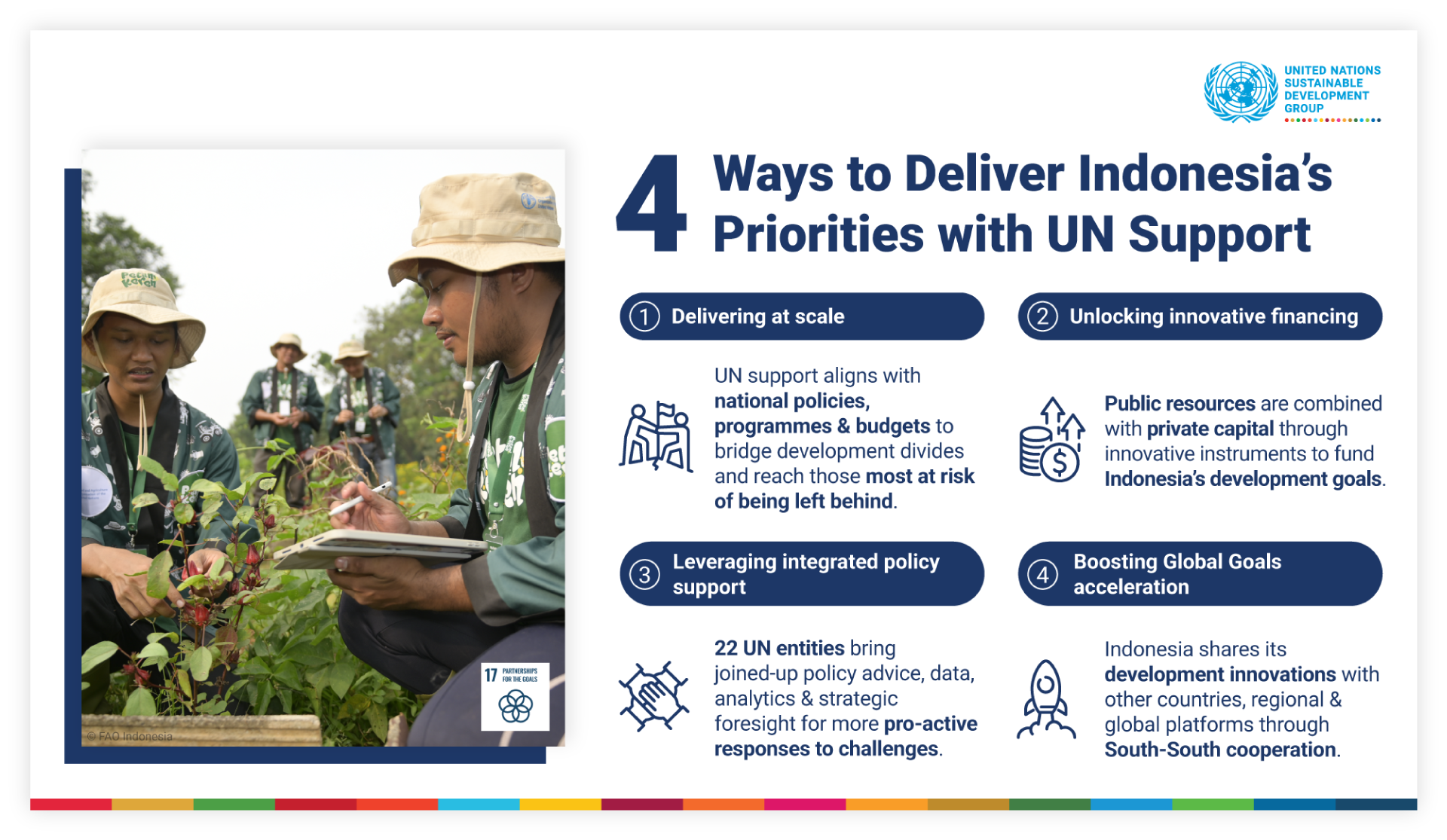
The approach centres on four ways that Indonesia can achieve its national priorities and leverage the UN’s unique strengths.
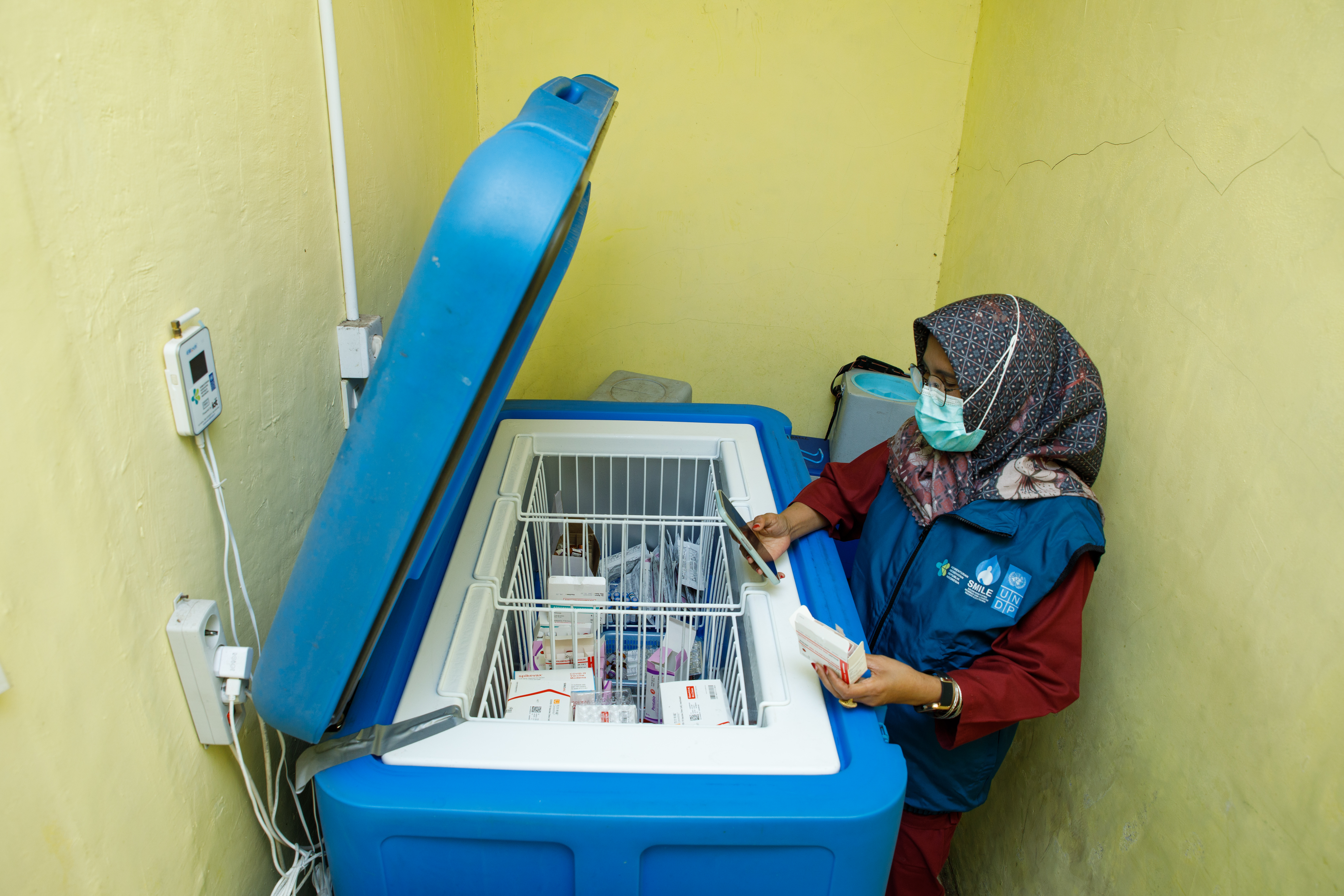
Firstly, delivering at scale: The UN is focused on aligning with national policies, programmes and budgets to help bridge development divides and reach those most at risk of being left behind. For example, through the Ministry of Health’s SATU SEHAT Logistics, built on the SMILE platform of the UN Development Programme (UNDP), Indonesia manages over 800 million vaccine doses and 100 million medicine doses across more than 10,000 facilities nationwide, improving last‑mile reliability through government systems.
Secondly, unlocking innovative financing solutions. Recognising that public resources alone will be insufficient to meet Indonesia’s development goals, the UN is expanding its collaboration with government and private-sector partners to attract new investments. Building on the $1.6 billion mobilised in 2024 through green sukuk and SDG‑linked bonds, the UN, in partnership with the Government will scale up the implementation of innovative financing, including blended finance and other mechanisms to mobilise private capital to accelerate progress toward the SDGs.
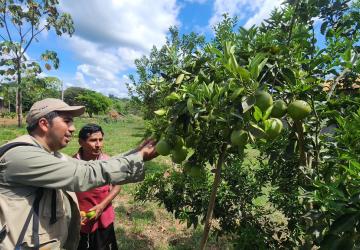
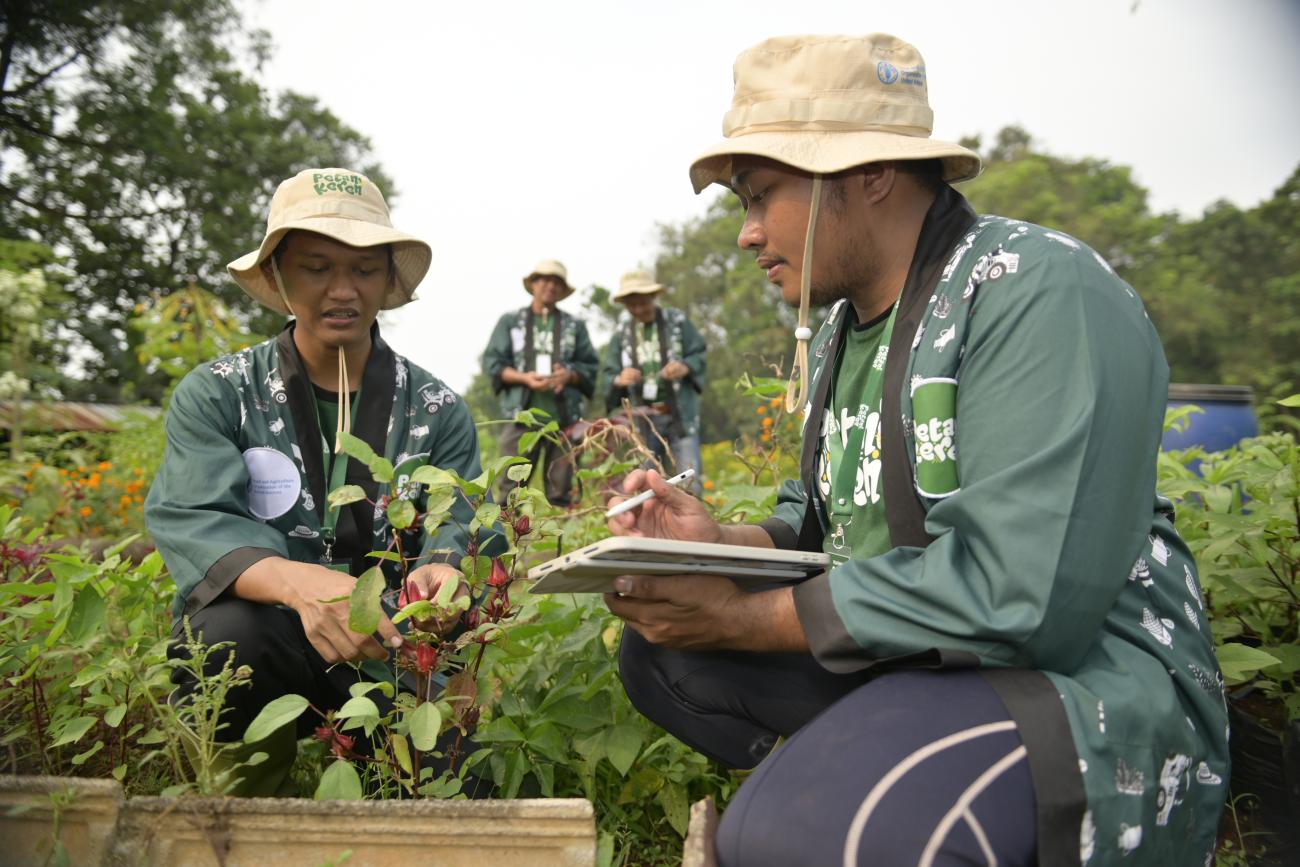
Thirdly, leveraging integrated policy support: The UN is harnessing the collective expertise of its 22 agencies active in Indonesia to deliver a more profound impact. This support is grounded in data, analytics and strategic foresight, enabling more comprehensive and proactive responses to complex challenges. For example, the Food and Agriculture Organization (FAO), the International Fund for Agricultural Development (IFAD) and UNDP support climate‑smart agriculture and smallholder resilience to strengthen food systems under climate stress, complementing national efforts on productivity, insurance, and risk management. These practices will be mainstreamed into the government’s rice insurance mechanism to reach half a million smallholder farmers directly.
Finally, boosting regional and global SDG acceleration: There is greater demand now on Indonesia AID to share its technical expertise and development innovations with countries across the Global South. The UN is playing a catalytic role by leveraging its country and regional presence to scale up South-South and triangular cooperation, contributing to global SDG acceleration. Indonesian AID has disbursed approximately $31 million in assistance as of September 2024, presenting a clear opportunity for the UN to connect with regional platforms.
A foundation for cooperation
As Vice Minister of National Development Planning/Vice Head of National Development Planning Agency (Bappenas), Febrian Alphyanto Ruddyard noted that this approach aims to “keep what works, fix what doesn’t, and approach our challenges with creativity and resolve.” These principles are embedded in the Indonesia-United Nations Sustainable Development Cooperation Framework 2026-2030, co-developed through extensive consultations with government ministries, civil society, the private sector and youth groups.
With this shift, the UN is fully aligned with national priorities, calibrated for scale, and forward-leaning in mobilising new sources of capital to accelerate the SDGs nationwide. The Cooperation Framework aligns with the country’s five-year national plan (2025-2029) and rallies together national systems, subnational capacity and private‑sector engagement to deliver at scale.
Together, Indonesia and the UN are not only advancing national development but shaping a model of inclusive, innovative, and resilient cooperation that can inspire progress across the Global South and beyond.
Read more about the UN's work in Indonesia on the UN Team's website.