A Better Future for Caring on El Cuco Beach

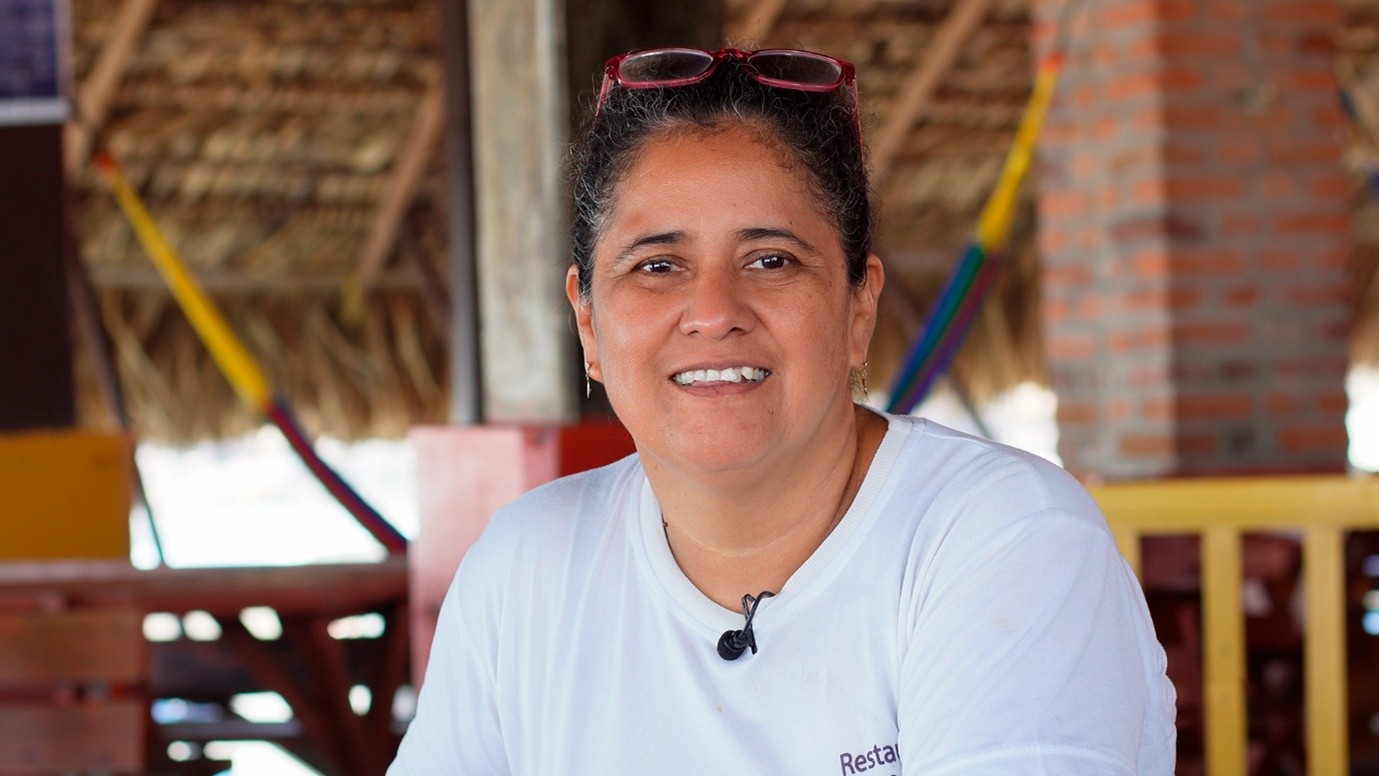
In the warm breeze of Playa El Cuco in San Miguel, El Salvador, the Buenavista restaurant bustles with customers. For Luri Chávez, its owner, this is more than a business: it is the centre of her family life. Luri’s story mirrors that of thousands of Salvadoran women balancing work with caregiving responsibilities.
"My family, my daughters [and] my husband depend on this business. We have been working here for 29 years," says Luri, who works alongside her eldest daughter while caring for her grandson and two younger daughters.
A life shaped by care
"Since I was little, I’ve had to care for others,” Luri recalls. Today, she helps her eldest daughter care for Daniel, her seven-year-old grandson with autism, and supports her two younger daughters, one of whom also has special needs.
"When they get sick, there’s an imbalance in our business because my eldest daughter or I, or both of us, always have to be there (…) We are mothers first, and the business goes on, and we keep moving forward," she says.
An invisible barrier
In El Salvador, unpaid care work is a daily reality, one that limits opportunities and growth. Women spend more than twice as much time per day on these tasks as men do: young women devote an average of more than 25 hours per week, while young men spend only a little over 7 hours per week.
In April 2024, the Government of El Salvador presented the National Policy on Shared Responsibility for Care. The policy, supported by the UN in El Salvador and drawing on UN Women's technical expertise, aims to recognise and value care work by expanding public services and promoting shared responsibility at home.
The UN is supporting the policy’s implementation through pilot projects, the design of care services and the provision of expertise to the Care Plan. Also, UN agencies have developed a joint programme to support the large-scale implementation of the policy, particularly in relation to the care of elderly people and persons with disabilities.

Bridging care and work
Still, policy change takes time. In San Miguel, the lack of formal care services is a daily challenge. "In the El Cuco area, we don’t have a daycare. Even if we had to pay, it would help us a lot as businesswomen, and even the women workers in the area, because many of them bring their children," she laments. Thus, children grow up in the business environment, and mothers and grandmothers live in constant tension between the duty to care and the desire to grow economically.
"The children are here at my business, and my daughter and I are cooking while constantly making sure they are okay. We have set alarms on our phones for medicine times, and no matter how busy we are, if the alarm rings, I run, or my daughter runs to give the medicine, and then we go back to work," Luri explains. For her, caregiving and business are inseparable.
Stronger institutions and services, stronger societies
Under the overall coordination of the Resident Coordinator's Office, UN Women, the UN Development Programme (UNDP) and the UN Population Fund (UNFPA), the UN in El Salvador is working to bridge gaps in care services and support the new policy. This includes strengthening local institutions and developing innovative care models like “Day Centres” and digital home care, inspired by successful approaches in other countries.
“The National Policy on Shared Responsibility for Care represents a fundamental step forward to ensure that care work is recognised, valued and shared in El Salvador,” emphasised Raúl Salazar, United Nations Resident Coordinator in El Salvador.
"For the United Nations, it is a priority to support the Government in building an inclusive and sustainable care system that opens new opportunities and improves the quality of life for women like Luri and for all families in the country.”
Caring for the caregivers
Luri dreams of growing her business, but knows she needs more support: "It’s not just about my autistic children. There are many children here in wheelchairs, with other conditions, and as mothers and entrepreneurs, that’s what we need: support, a lot of support. If we had it, we would feel freer and more at ease to grow our businesses," she says.
The UN’s support in implementing the policy also includes building the capacities of those who perform paid and unpaid care work, caring for their mental and physical health, and strengthening regulatory frameworks to recognise and guarantee their individual and collective labour rights.
By changing social norms, attitudes, and behaviours to promote shared responsibility within families and among the market, the State, and communities, the UN is turning the spotlight on the needs of caregivers.
The road to an inclusive care system
Despite challenges, Luri remains hopeful: "I see myself succeeding with my daughter and grandson, through my business. I hope my business will allow me to support their dreams, but also for my two other daughters. I hope my business continues to be profitable and even more so, to give them what they need, to provide the medicine that María José and Danielito need so much," she says.
The National Policy on Shared Responsibility for Care and equitable services, through the joint UN initiative, offers a glimmer of hope for transforming Luri’s reality and that of many other women in El Salvador. This is fulfilling the promise to leave no one behind, a step for a sustainable future, one family at a time.
Learn more about the UN's work in El Salvador on the UN team's website.