

On and Beyond the Screen: The Reality of Digital Violence

This article was jointly authored by Belen Sanz Luque, UN Women, Regional Director for Europe and Central Asia; Florence Bauer, UN Population Fund (UNFPA), Regional Director for Eastern Europe and Central Asia; Gwi-Yeop Son, UN Development Coordination Office (UNDCO), Regional Director for Europe and Central Asia; and Hans Kluge, World Health Organization (WHO), Regional Director for Europe.
Violence against women and girls remains one of the most pervasive human rights violations of our time. Despite decades of progress in laws, services and prevention, nearly one in three women around the world continues to experience physical or sexual violence in her lifetime. In 2023, a woman was killed every ten minutes by someone in her own family. In the Europe and Central Asia region alone, an estimated 24 million women have experienced physical or sexual violence by an intimate partner in the past year.
The truth is as sobering as it is unacceptable: intimate partner violence against women and girls has declined a meagre 0.2 per cent annually over the past 20 years globally.
In some ways, the challenge is deepening. We are witnessing an alarming rise in pushback against women’s rights, with anti-rights movements targeting women in public life, including human rights defenders and journalists.
At the same time, the rapid growth of artificial intelligence is enabling new and complex forms of violence and harassment online. Misogynistic narratives in digital spaces — fuelled by the so-called “manosphere” — are seeping into mainstream culture, normalising discrimination and shaping harmful social norms, especially among young audiences.
As our lives have increasingly moved online, technology has become both a new frontier and a new battlefield. Violence has spread to a new domain, exacerbating existing forms of violence against women and girls. Violence that is facilitated by digital technologies includes sextortion, image-based abuse, unwanted sharing of intimate photos, doxing, cybergrooming, cyberstalking and using technology to locate survivors of offline abuse to inflict further violence.
According to a UN Women report, more than half of women over 18 across Europe and Central Asia who use digital technologies have experienced at least one form of digital violence. Among women who had experienced digital violence in the region, the most prevalent forms include receiving unwanted or offensive content or messages (40 per cent), receiving inappropriate sexual advances or content on social networking (30 per cent) and hacking women’s accounts and web pages (25 per cent). A large proportion of women experienced digital violence once (40 per cent), while one in seven women experiences such violence daily or weekly.
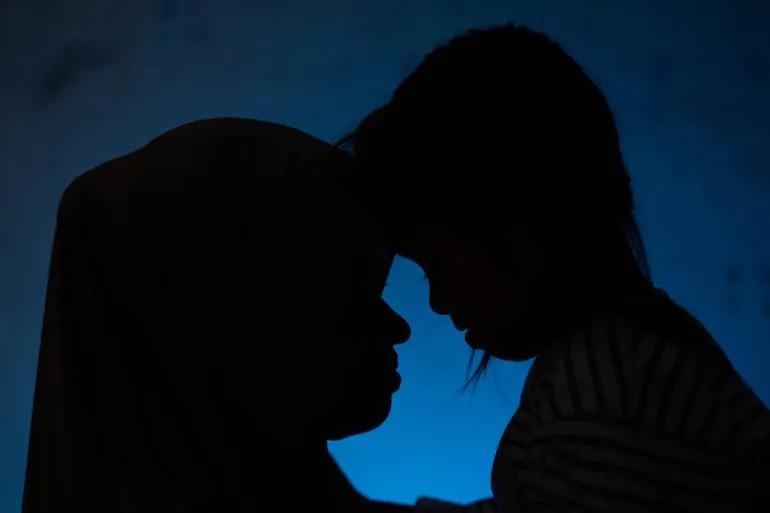
“I had a private Instagram account since the age of 13. Everyone had one, so I thought I should too,” Lina, now 18, told us. “All was fine until I started receiving unwanted photos and threats that I would be raped and killed if I didn’t send my own.”
Age is, in fact, the strongest risk factor. Young women between 18 and 24 are four times more likely to experience digital violence than women over 65. Many of them are also more likely to experience abuse offline: harassment, stalking and sexual or physical violence, often from the same perpetrators who targeted them online.
Women from ethnic or religious minorities, LGBTQIA+ women and non-binary individuals, and women with disabilities are also attacked and discriminated against at higher rates and in distinct forms.
What happens on a screen does not stay there. Digital violence inflicts real harm: anxiety, depression, loss of livelihood and sometimes life itself. It is an attack on women’s bodily autonomy and mental health, eroding their sense of safety in both public and private life.
“He started contacting me, then my friends. He monitored my accounts. I blocked him, but he made fake ones. Once, he found out from my Facebook profile that I would attend a literary event. He came there and met my friends. Luckily, I wasn’t there. I stopped posting anything, but he still found me […],” recalls Dina, 26.
Technology is not neutral. It reflects the biases, priorities and blind spots of those who design and fund it. 90 to 95 per cent of deepfakes online are sexualised images of women. The digital world mirrors the same gendered power dynamics that disadvantage women offline, and at times, magnifies them. The rise of online hate movements and gendered disinformation are not isolated phenomena. They are an extension of the same harmful norms that justify and normalise violence against women everywhere.
Women who dare to speak up — journalists, politicians, human rights defenders and feminist activists — pay a particularly high price. Globally, one in four women journalists and one in three women parliamentarians report receiving online threats of physical violence, including death threats. Digital harassment silences women’s voices, drives them out of public life and undermines democracy itself. When half of humanity is intimidated into silence, our societies lose truth, balance and progress.
Digital violence is not virtual. It is real violence, with real targets and real consequences. It robs women of their voices, rights and choices. It threatens their health, safety and ability to participate fully in society. Ending it requires more than just regulation or better reporting tools; it requires transforming the social norms that make such violence possible, tolerated and invisible.
As we mark the end of the 16 Days of Activism against Gender-based Violence, we invite you to join us in accelerating this work — to help close data and research gaps, strengthen and uphold normative frameworks, ensure essential services truly meet the needs of survivors and engage men and boys in transforming the harmful social norms that allow violence to persist.
Almost 25 years since we first marked this occasion, the message remains unchanged but more urgent than ever. Technology can be a powerful ally for equality, but only if it is designed, governed and used with women’s rights and safety at its core. There is no excuse for silence, no excuse for complicity and no excuse for violence — online or off.
This op-ed was originally published on UN Women’s website. Visit our website to learn more about the UN’s work in advancing gender equality.





Latest news and updates