From Baku to Belém: China’s Climate Commitments

China’s updated Nationally Determined Contribution (NDC) for 2035 sets out a clear pathway for reducing emissions. For the first time, it includes an absolute national limit on emissions rather than a target linked to economic growth, and it commits the country to reducing total emissions by 7-10 per cent from their peak. These changes matter not only due to China’s size and economic structure, but also because its policy choices have a major influence on global climate trends.
This raises a simple question. What are NDCs meant to do, and why do these commitments matter?
In essence, NDCs are a country’s climate action plan. They outline how much a country intends to cut emissions and how it will respond to climate impacts. Stronger NDCs demonstrate greater ambition and accountability, and they help guide investment, technological cooperation and long-term development planning.
Policy development for a greener future
Moving from global climate processes, such as COP29 in Baku and COP30 in Belém, to national implementation requires clear policy pathways and coordinated support. Under the leadership of the Resident Coordinator (RC), the UN in China is supporting national partners as they map out how these commitments can be delivered through policies that also advance sustainable development.
The UN in China works with partners to support policy development by drawing on system-wide expertise. Through long-standing engagement with national advisory mechanisms, the UN Environment Programme (UNEP) and the UN Development Programme (UNDP) serve as special advisors to the China Council for International Cooperation on Environment and Development (CCICED), with the UNEP Executive Director and the UNDP Administrator serving as International Vice Chairs. This unique platform invites experts from around the world to share policy recommendations crucial to China’s sustainable development efforts.
As an advisor, UNDP provided feedback on several special studies that informed the 2024 policy recommendations presented to the State Council. These focused on issues at the heart of NDCs — the triple planetary crisis of climate change, biodiversity loss and pollution and waste.
The UN in China also consistently makes use of its agencies’ specialties, as shown through the Partnership for Action on Green Economy (PAGE), which has brought together UNEP, UNDP, the International Labour Organization (ILO) and the United Nations Industrial Development Organization (UNIDO), along with the UN Institute for Training and Research (UNITAR). PAGE provides policy advice and assessments to support China’s transition to an inclusive green economy and, since 2015, has worked with Jiangsu Province to develop various policies related to green industrial development, jobs and trade.
In an effort to reach as many partners as possible, UNIDO collaborated with the Global Environmental Facility (GEF) on the “China Green Hydrogen: from Production to Hard-to-Abate End Uses” project. UNIDO and GEF aim to achieve 11.4 million tons in emission reductions by supporting the decarbonisation and energy transition in China’s hard-to-abate sectors.
By working with a broad array of stakeholders, the UN in China’s policy planning and analysis is supporting the country to ensure that its NDC is impactful and inclusive.

China’s role in South-South cooperation
China’s growing engagement in South-South cooperation is an important part of its overall climate response. Through knowledge sharing, renewable energy technology transfer and training initiatives, China supports other developing countries across Asia, Africa and Latin America in advancing their climate goals and NDCs.
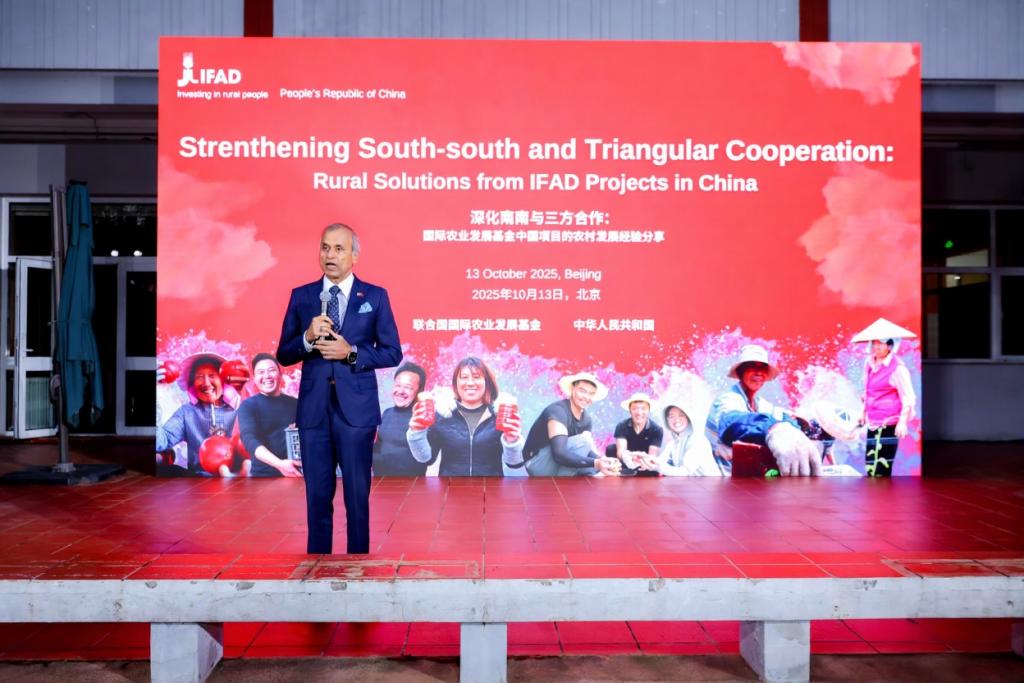
Earlier this year, the Government announced the new China-UN Global South-South Development Facility (2025-2030), in partnership with the United Nations Office for South-South Cooperation (UNOSSC). The Chinese Government contributed an initial investment of $10 million and will work with the UN to support green and resilient development, sustainable industrialisation and the economic empowerment of youth and women, all of which support inclusive climate action across the developing world.
Mobilising climate finance for implementation
Turning climate commitments into action requires financing. Partnerships involving national development banks, international financial institutions and the China International Development Cooperation Agency offer opportunities to scale climate-aligned investment. UN entities in China contribute by providing analytical support, helping convene stakeholders and facilitating alignment with sustainable development principles.
In 2024, 12 UN agencies supported the mobilisation of approximately $50.8 million in South-South Cooperation funding, primarily through China’s development cooperation mechanisms. These resources were directed to projects benefiting 23 countries as well as several regional and multi-country initiatives, extending the reach of South-South Cooperation beyond individual nations to broader geographic areas and collaborative platforms. The funding supported efforts in climate change, biodiversity, food security, public health, education and youth empowerment, helping both countries and regions strengthen their capacity for sustainable development.
The bigger picture
Through coordinated work in policy development, localisation and South-South cooperation, the UN in China is supporting the Government in implementing its updated NDC and to accelerate climate action across the Global South.
China’s new NDC establish a clearer pathway for lowering emissions. Coordinated multilateral support helps translate this framework into action that delivers results for people and for the planet.
Read more about the UN's work in China on the UN team's website.





Latest news and updates