How the UN is Supporting Countries to Turn Climate Plans into Development Results
By Poorti Sapatnekar, Sustainable Development Officer (UNDCO), Denis Subbotnitskiy, Sustainable Development Officer (UNDCO) and Catherine Diam-Valla, Technical Advisor and Climate Promise Lead (UNDP)
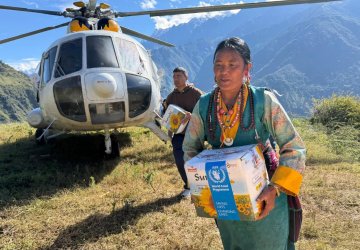
Countries have developed ambitious Nationally Determined Contributions (NDCs) as their plans to guide a more resilient economic growth pathway. Yet ambition alone will not protect communities from worsening climate impacts. In Nepal, the devastating floods that swept down the Bhote Koshi-Trishuli river system in August took more than 1,400 lives. They also struck critical infrastructure, including the clean-energy infrastructure on which affected communities depend. Similar disasters are becoming more frequent and severe worldwide, threatening food security, livelihoods and hard-won development gains.
At the Secretary-General's High-Level Event on Climate Action and the Just Transition on 23 September, world leaders focused on the defining task of this decade: turning national climate commitments into investments, stronger resilience and better lives.
If implemented well, NDCs can not only cut emissions and strengthen adaptation, but also drive economic modernisation, create decent jobs, improve energy security, support food and water systems and protect people at risk of being left behind. But those development benefits must be designed into policies and investments from the outset — and that is where integrated support to countries will make the difference.
What Climate Promise: Forward offers
This is the premise behind Climate Promise: Forward, the United Nations system's common framework for supporting implementation of NDCs and accelerating progress towards the Sustainable Development Goals.
Launched in response to a directive by the Secretary-General, and jointly coordinated by the Development Coordination Office (DCO) and the UN Development Programme (UNDP) on behalf of the UN system, Climate Promise: Forward harnesses the technical expertise spread across dozens of UN entities and makes it easier for countries to find and mobilise.
At its core lies the proposition: climate implementation is SDG acceleration. The aim is to support Member States in achieving their climate goals effectively and comprehensively, from policy advice to project-level delivery, in ways that advance the Sustainable Development Goals.
For a government expanding renewable energy, this means combining technical and policy support across regulation, investment preparation, skills and social protection. For communities facing rising climate risks, it means linking adaptation with resilient infrastructure, food security, gender equality measures and livelihoods.
Tackling the barriers to delivery
Climate Promise: Forward tackles the most common barriers to NDC implementation and SDG acceleration through four mutually reinforcing levers: policy, to strengthen coherence and institutions; finance, to prepare investments and attract resources; solutions, to adopt and scale what works; and engagement, to build national ownership and participation across society.
The approach embeds gender equality and a just transition in the design of support so that no one is left behind, and uses digital technologies and artificial intelligence to sharpen planning and monitoring, with safeguards for inclusion, rights and responsible use.
Recent UN-supported work, which Climate Promise: Forward now builds on, shows how the development dividend grows as more of the UN system comes together behind a national priority.
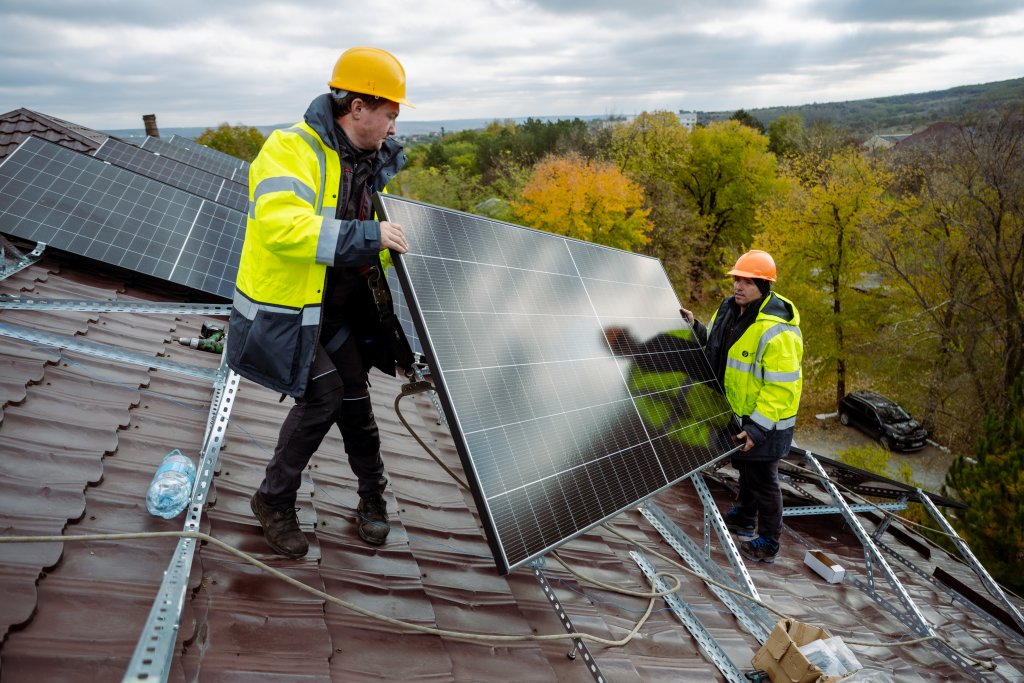
Keeping the transition fair in Moldova and Suriname. Climate action endures only if people can afford it and are not left out of it. When the war in Ukraine triggered an energy price shock, the Government of Moldova created the Energy Vulnerability Reduction Fund with UNDP support, pairing targeted compensation with energy efficiency. It reached 719,000 households in the 2024-2025 heating season. In Suriname's interior, where fewer than 30 percent of households have reliable electricity, a UNDP-World Food Programme (WFP) joint programme supported by the Joint SDG Fund has worked with 21 Indigenous and Tribal villages on the designs and costings needed for bankable renewable energy proposals. In both countries, energy policy is also social policy.
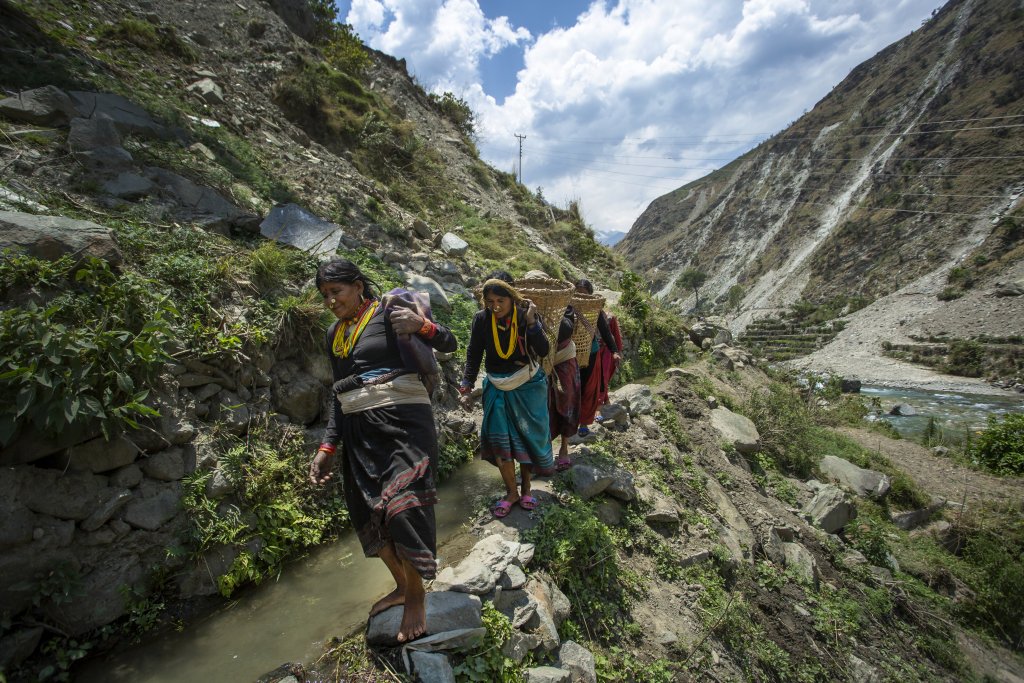
Linking energy, food and resilience in Nepal. Nepal's NDC 3.0, prepared with support from UNDP alongside the UN Children’s Fund (UNICEF), UN Women, UN Educational, Scientific and Cultural Organization (UNESCO), Food and Agriculture Organization (FAO), World Health Organization (WHO) and other UN agencies, prioritises early warning systems and glacial lake outburst flood risk reduction. The August floods made those priorities painfully concrete. Delivery combines mandates too: with the Alternative Energy Promotion Centre and local governments, UNDP and WFP have rehabilitated 13 micro-hydro plants that now supply 5,537 households, while lift irrigation supports year-round farming and farmers' groups supply locally grown food to school meals. One investment advances clean energy, food security, nutrition and rural incomes.
Financing transformation at scale in Indonesia. Led by the Resident Coordinator, UNDP, UN Environment Programme (UNEP), UNICEF and UN Industrial Development Organization (UNIDO) helped the Government build a financing architecture that serves climate and development goals together. With under $10 million from the Joint SDG Fund, their joint programme played a catalytic role in mobilising more than $5.7 billion through thematic bonds, including SDG Bonds, Green Sukuk and the world's first publicly offered sovereign Blue Bond. The same instruments finance both agendas. Green Sukuk proceeds have contributed to cutting 2.8 million tonnes of CO₂ through energy efficiency and sustainable transport, while SDG Bonds support education, health and irrigation. Six commercial banks holding $136 billion in assets have since committed to developing sustainable finance frameworks.
Organizing UN support for lasting change
Climate Promise: Forward builds on Climate Promise 2025, through which the UN system, with some 30 entities involved, supported 107 countries in preparing their new NDCs.
25 UN entities and partners will support the longer-term implementation of NDCs, through the UN Sustainable Development Cooperation Framework — the primary instrument through which the UN plans and implements development activities in support of government priorities.
Embedding climate implementation within the architecture and processes of the reformed UN development system, particularly through the Cooperation Frameworks and the leadership of Resident Coordinators, Climate Promise: Forward avoids creating another parallel climate process. Instead, it moves support from fragmentation to collective delivery by bringing together the full breadth of expertise of the UN development system while helping connect governments with development finance institutions, multilateral development banks, climate funds, civil society, academia and the private sector.
As development budgets tighten, this model maximises the coherence and impact of the UN system and development partners.
What comes next
As countries look towards COP31 and the race to achieve the SDGs by 2030, UN support via Climate Promise: Forward is already ramping up.
In 2027, over 30 UN Country Teams will design new Cooperation Frameworks, a direct opportunity to build NDC priorities into UN support from the outset. These priorities will translate into joint workplans, financing strategies, partnerships and shared results over several years. Working together and aligning Cooperation Frameworks with NDCs are the means, not the measure. The test of Climate Promise: Forward is whether a government with a climate priority can find the expertise, partners and finance to deliver it together with its development goals, without having to assemble them piece by piece. This would mean more reliable and affordable energy, livelihoods that withstand climate shocks, and opportunities that reach people too often excluded.
As the Secretary-General put it, “We must match an accelerating crisis with accelerating action, match the revolution in energy with a revolution in finance and match rising impacts with rising protection.”
For more information, visit the UN's Climate Promise: Forward.





Latest news and updates