How Viet Nam is Leading the Fight Against Technology-Facilitated Gender-Based Violence

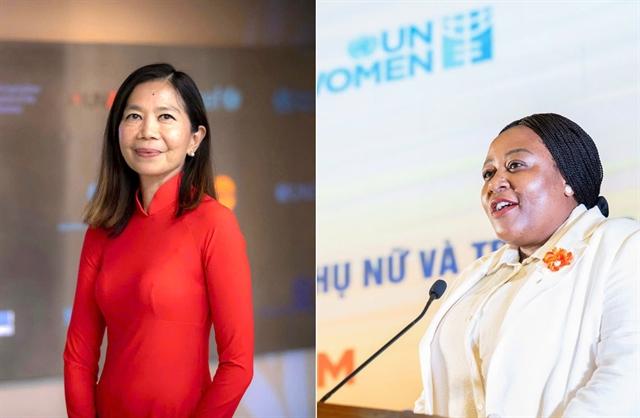
Marking the 16 Days of Activism, UN Resident Coordinator in Viet Nam Pauline Tamesis and UN Women Country Representative in Viet Nam Caroline Nyamayemombe reflect on how Viet Nam is strengthening efforts to make its rapidly expanding digital space safer and more inclusive for women and girls.
Viet Nam has made notable progress in advancing gender equality and promoting women’s rights. Its commitment is reflected in strong national policies, investments in digital transformation, and increasing participation of women in public life. The country has also demonstrated global leadership through the Hanoi Convention on Cybercrime, signalling its determination to foster a safer, more resilient digital environment for all.
As technology transforms every aspect of society, digital spaces have become central to how people learn, work, connect and express themselves. However, alongside these opportunities, the online world has also introduced new risks, including technology-facilitated gender-based violence (GBV). This type of violence includes image-based abuse, cyberstalking, impersonation, deepfakes, and online harassment. It reflects and intensifies offline inequalities, often escalating tensions in relationships and increasing the risk of physical harm.
Global studies estimate that 16 to 58 per cent of women and girls have experienced technology-facilitated violence, and about 300 million children suffer online exploitation each year. In Viet Nam, two per cent of adolescents aged 15 to 17 reported having exchanged sexual images and videos of themselves for money or gifts, known as online child sexual exploitation.
With 86 per cent of Viet Nam’s population online last year, the digital world has become a new battleground in the fight against gender-based violence. However, awareness of technology-facilitated gender-based violence remains limited, and response mechanisms are still being developed.
The UN Global Digital Compact advocates for gender equality and the empowerment of all women and girls, and aims to combat and eradicate all forms of violence, including sexual and gender-based violence that occurs through or is exacerbated by technology. Through collaboration with member states, the UN works with the Government of Viet Nam and national partners to enhance prevention and response efforts. The UN Joint Programme on Ending Violence Against Women and Children (EVAWC), funded by the Australian Government’s Department of Foreign Affairs and Trade, supports the efforts of the UN Population Fund (UNFPA), the UN Children’s Fund (UNICEF) and UN Women.
Since 2023, the EVAWC programme has helped strengthen Viet Nam’s digital safety and resilience. Through campus dialogues, influencer engagement, and public messaging, the programme built practical skills to prevent and respond to technology-facilitated GBV, helping women, adolescent girls, and parents build confidence and share responsibility for creating safer digital spaces.
Beyond the joint programme, the UN promotes online safety for women and children, as well as access to quality, comprehensive care for survivors. One Stop Service Centres in Ho Chi Minh City and capacity-building of service providers equip frontline responders to recognise and respond to online abuse.
In 2023, over 30 women’s groups received training on cybersecurity and solidarity networks. A Safety App (S-App) was developed in Đà Nẵng, and an e-Peace House platform is being designed to support survivors of GBV. These interventions are being developed to enable access to help with a click. Communications campaigns – including the 16 Days of Activism led by UN Women, those against sexual trafficking by the International Organisation for Migration (IOM), others against cyber bullying by the UN Education, Scientific and Cultural Organisation (UNESCO) and those tackling child protection by UNICEF – advocate for various forms of online safety for women and girls, reaching millions of people in Viet Nam.
As with offline violence, a society-wide approach is needed. The Government of Viet Nam is making significant strides, collaborating with platforms such as Facebook, Google, TikTok and YouTube to combat online child sexual abuse. These efforts align with Viet Nam’s first National Action Plan on Women, Peace and Security, which underscores women’s right to live free from violence both online and offline.
Ending technology-facilitated gender-based violence demands awareness, accountability and action. Every click, share, and post is a choice to build a digital world that is safe, respectful and inclusive. Viet Nam’s digital transformation agenda can lead by example, creating a future where every woman and girl can connect, speak and thrive online, free from fear. Building on the country’s achievements and the longstanding collaboration between the Government, the United Nations in Viet Nam team and international partners, we will continue to support national efforts to strengthen prevention, protection and accountability in the digital space.
Together, we can ensure technology becomes a force for empowerment, fostering safety, respect and inclusion for all.
This op-ed was first published by Viet Nam News. Learn more about the UN's work in Viet Nam on the UN country team website.





Latest news and updates