Middle East Crisis is Deepening Fiscal, Food and Energy Pressures Across Developing Countries, New UN Brief Finds
New UN Sustainable Development Group analysis shows how rising fuel costs, debt burdens and limited fiscal space are compounding existing development pressures — and why countries need support that moves from crisis response to building resilience.
The economic spillovers from the crisis in the Middle East are reaching well beyond the region, compounding debt, food insecurity, climate shocks and limited fiscal space across developing countries, according to a new UN Sustainable Development Group policy brief released on Friday.
Deputy Secretary-General Amina J. Mohammed and UNDP Administrator Alexander De Croo joined Member State representatives at a high-level event on Friday to discuss the impact of these poli-crises on sustainable development and what is needed to protect hard-won development gains.
The new policy brief, From Shock to Resilience: Protecting development gains amid compounding crises, co-authored by the UN Development Coordination Office (DCO) and UN Development Programme (UNDP), draws on analysis from across the UN development system and reporting from UN Country Teams. Its central message is that many countries are no longer managing one shock at a time. Instead, higher food, fuel and transport costs are colliding with debt burdens, climate shocks, food insecurity and constrained public finances.
Rising prices, shrinking fiscal space
The scale of the pressures is significant.
According to data by UNDP, across 130 countries, average retail prices for gasoline and diesel have risen by 22 and 32 per cent respectively since the conflict began in late February. At the same time, many developing countries have less room to absorb those shocks. Fifty-five developing countries — 44 per cent of the sample — now spend more than 10 per cent of government revenue on interest payments, compared with 32 countries a decade ago. Interest payments relative to revenue across developing economies are now at levels not seen in more than 20 years.
This is sharpening what the brief describes as a debt-development trade-off: governments face growing pressure to protect households from higher food and energy costs through subsidies, tax reductions and price controls, while also preserving fiscal stability and maintaining long-term development investment.
A May 2026 UNDP–DCO survey of 104 UN Country Teams highlighted the tension between short-term protection and medium-term fiscal sustainability; a subsequent September 2026 UNDP survey of 26 countries showed this trade-off intensifying with nearly 70 per cent of government policy interventions focusing on containing price increases through subsidies, price caps and rationing, while more than half of requests to the United Nations concerned support for increased access to, and mobilisation of, finance.
A global shock with unequal impacts
The effects are global, but they are not evenly distributed.
The brief finds that a country’s exposure depends on three interrelated factors: its dependence on imported food, fuel and fertiliser; the vulnerability of households and firms; and countries' ability to respond through efficient use of fiscal resources, well-targeted social protection systems, strong institutions and access to finance.
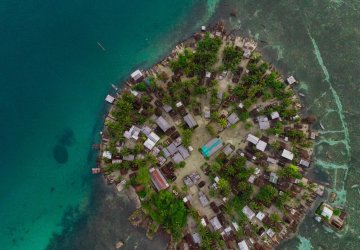
Import-dependent developing economies with weak fiscal positions are among those facing the greatest pressure. Landlocked developing countries are particularly exposed to higher transport costs, while Small Island Developing States face acute dependence on imported fuel, food and maritime transport. Fragile and conflict-affected settings must absorb these new pressures on top of existing humanitarian, displacement and institutional challenges.
The current crisis is also interacting with wider global pressures, including climate-related shocks and trade disruptions affecting major trade corridors such as the Strait of Hormuz, the Red Sea and Bab el-Mandeb, the Black Sea and the Panama Canal.
From crisis response to resilience
The policy brief argues that countries increasingly need support that goes beyond emergency relief.
Governments are asking the UN development system for help with macroeconomic and fiscal analysis, price monitoring, vulnerability assessments, stronger social protection systems, resource mobilisation and access to finance.
UN Country Teams are already helping governments translate analysis of the impact into policy and financing options.
Thirty-five UN Country Teams have submitted proposals through the Joint SDG Fund’s Development Emergency Modality – Middle East crisis response window, focusing particularly on food security, fuel and energy, analytics and policy support. The aim is to help countries move from diagnosis to implementation and ultimately mobilise larger-scale public and private financing.
The brief calls for a decisive shift from absorbing shocks to building resilience — pairing better analysis and targeted social protection with stronger institutions, sustainable food and energy systems, and affordable finance. The goal is not simply to manage the next crisis, but to protect development gains before they are lost.
Read the policy brief, "From Shock to Resilience: Protecting development gains amid compounding crises."





Latest news and updates