In Nepal, UN and Partners Mobilise Funding for Government-led Flood Response
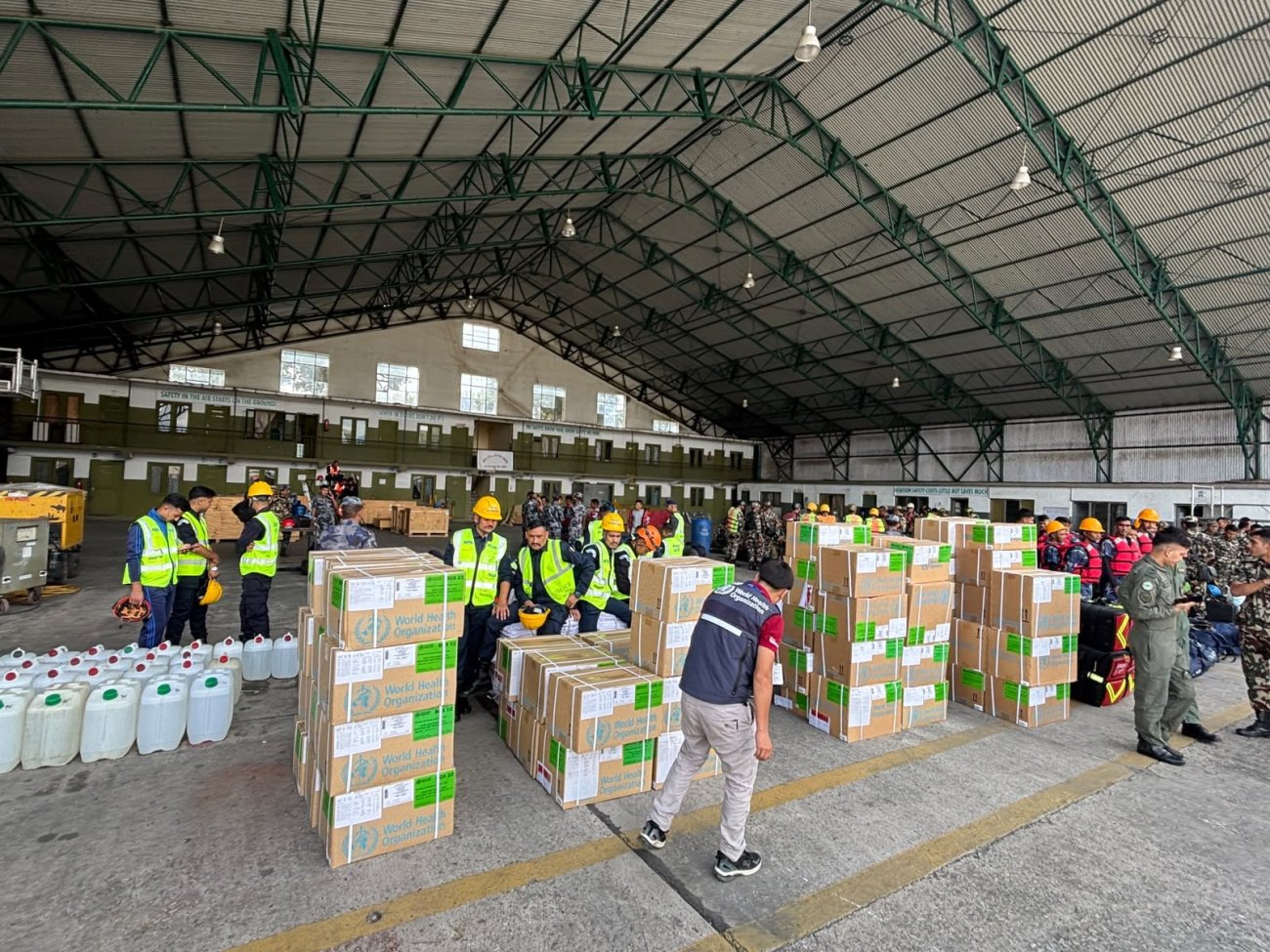
Following devastating floods that have killed hundreds of people and left more than 900 missing across Nepal, the UN and partners have released emergency funding, deployed assessment teams and mobilised supplies to support the Government-led response.
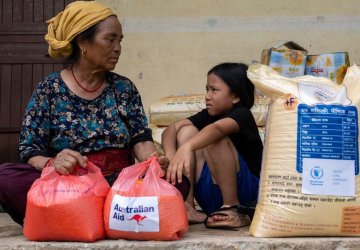
- UN agencies are providing relief and conducting assessments, with trucks, equipment, generators and food already being delivered.
- International funding has come in quickly, with the UN releasing $2.5 million in emergency funding and further support pledged by Switzerland, Australia and the United Kingdom.
Briefing journalists from Kathmandu, UN Resident Coordinator in Nepal Lila Pieters Yahia set out how the UN is organizing its support behind the Government's own response, working to ensure the growing wave of international assistance reaches people quickly.
A team from the UN Office for the Coordination of Humanitarian Affairs (OCHA) was arriving to help strengthen that coordination, she said, and the UN had already released $2.5 million from the Central Emergency Response Fund (CERF) to help get relief efforts moving. She will travel to the affected area on Friday (28 August) to see the response first-hand.
Across the UN system, agencies are working alongside the Government to deliver support on the ground. RC Pieters Yahia said the UN Children's Fund (UNICEF), the World Food Programme (WFP), the UN Population Fund (UNFPA) and the World Health Organization (WHO) were all mobilised, conducting assessments and addressing immediate needs, including providing equipment, generators and food.
The UN’s efforts are being reinforced by a wider circle of international support that the Resident Coordinator's Office is helping to align with the Government's priorities. "The Swiss Government has generously given us $1 million," RC Pieters Yahia said, adding that "both Australia and the United Kingdom will be also providing some relief funding to support the Government."
The Government of Nepal has established its own relief fund, towards which the World Bank, India, China and the US have committed to pledge $229 million.
A rising toll, with search and rescue ongoing
According to official Government figures relayed by RC Pieters Yahia, 359 people had died as of 7 p.m. Kathmandu time (27 August), with 73 people hospitalised, some of whom have since been released. The number of missing stood at 910, including 517 foreign nationals, while 796 people had so far been rescued. RC Pieters Yahia said more than 30,000 security personnel are involved in search and rescue efforts.
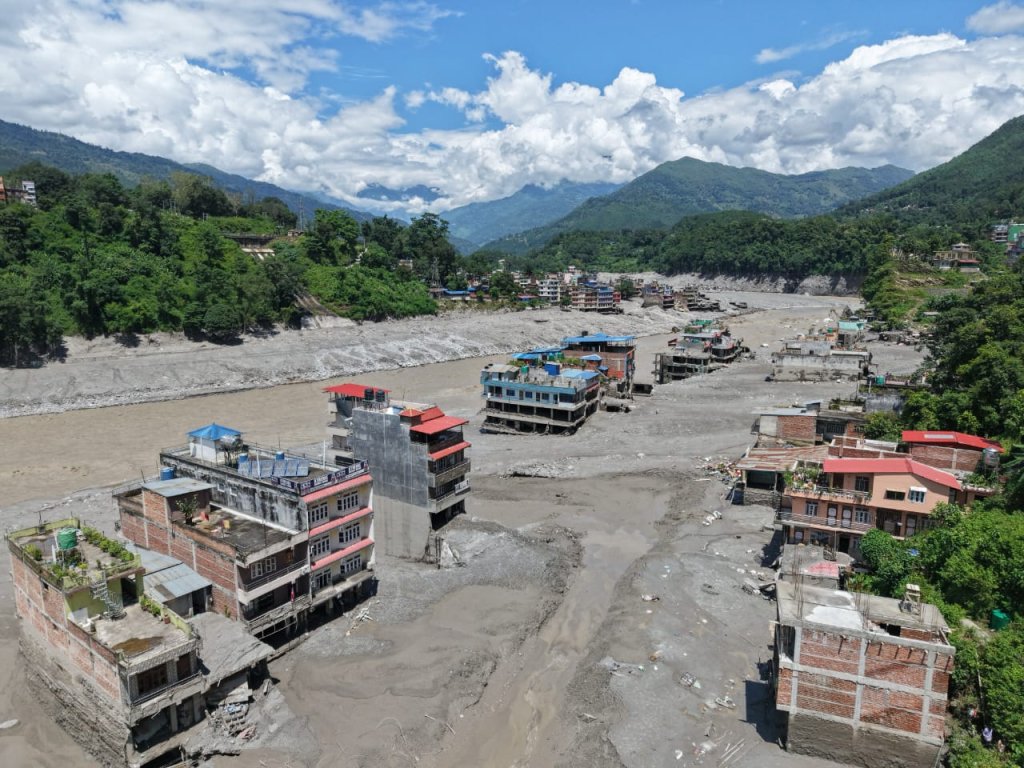
On the scale of destruction to infrastructure, she said access remained "extremely, extremely difficult," with over 35 bridges destroyed and roads cut off across the affected area. About 40 kilometres of road have been damaged, electricity has been disrupted across roughly 10 per cent of the total affected area and about 10,000 households are in immediate need.
Beyond the immediate emergency, RC Pieters Yahia flagged an additional hazard: the Government had issued a warning of potential further flood risk on the Koshi River. She said the priority now was caution, with warnings sent to residents, relief workers and tourists in the area, urging them to stay away from riverbanks and move to higher ground.
She noted that the country remains in monsoon season, a period that has brought a steady pattern of landslides over the past three months, and warned that continued rain was likely to bring further roadblocks.
Supporting a Government-led response
The Government of Nepal is leading and coordinating the response, determining what is needed on the ground, with strong direction coming from the Prime Minister. The Government and the UN are working through joint teams, or clusters, grouped by area of need, such as health, shelter or food, with the two sides meeting regularly to keep the response aligned.
"The clusters have been activated by the Government, and both the cluster lead, which is the Government, and the co-cluster leads, which are headed by the United Nations, will be meeting," RC Pieters Yahia said, "to ensure that we understand what are the exact needs that the Government is requiring." The meeting will also “make sure that there is no duplication" and that aid coming from outside "will be properly distributed."
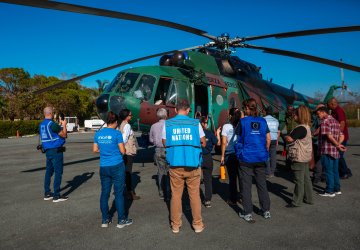
Reaching the hardest-hit communities remains a central challenge. One municipality is impossible to reach by road, RC Pieters Yahia said, with all support being delivered by the Government by helicopter. The Government is working to deploy temporary bridges, with some already made available through international support, while WFP is exploring whether the UN could help procure additional bridges if needed.
RC Pieters Yahia extended "our sincere and deep condolences and sadness over the loss of life which has been caused by the flood," on behalf of the United Nations and the wider international community based in Kathmandu. "The magnitude of the disaster is just — I can't find the words to describe what happened yesterday," she said.
Please visit the UN team's website for more information about the UN's work in Nepal.





Latest news and updates