A Roadmap Home for South Sudan’s Displaced Families
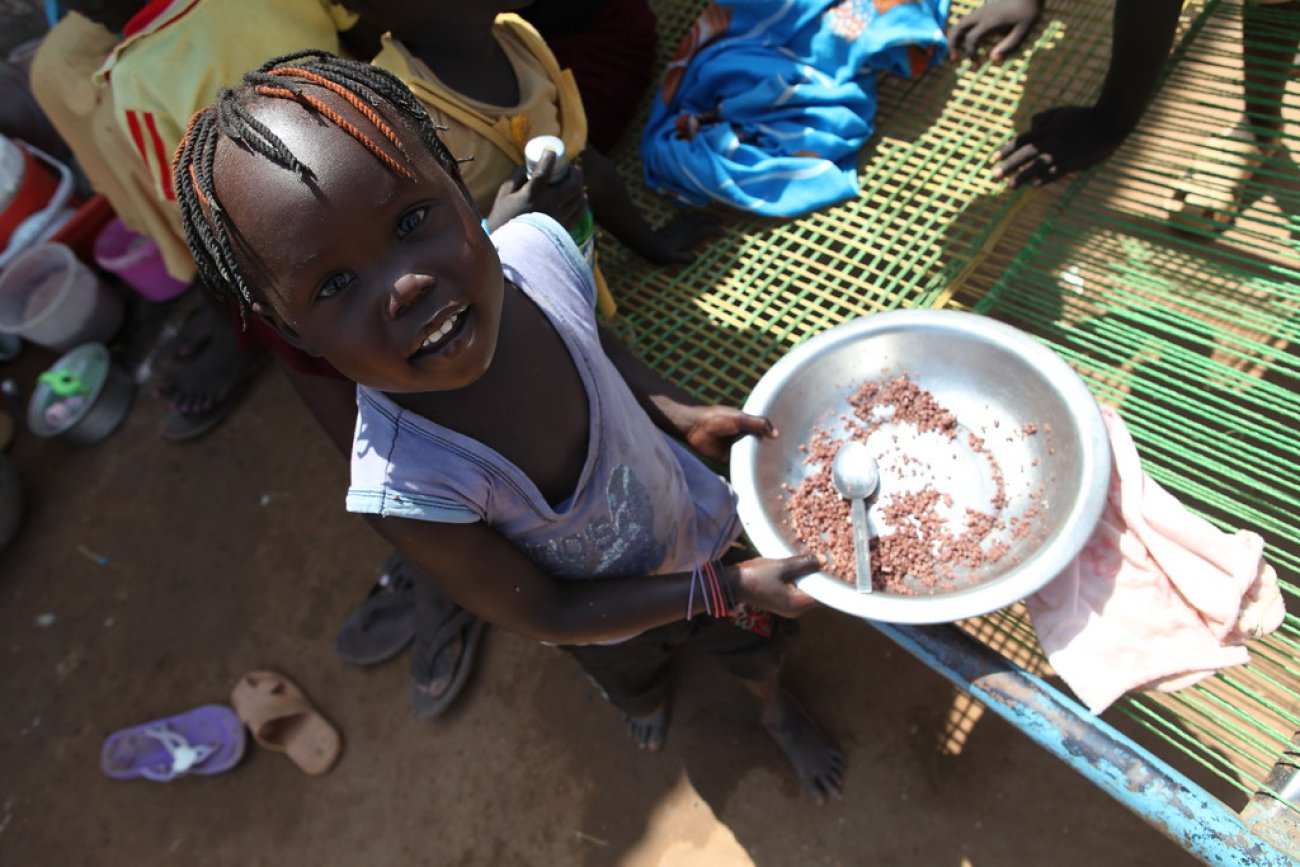
This story was published in observance of the International Day of Awareness of the Special Development Needs and Challenges of Landlocked Developing Countries. Without access to the sea, many landlocked developing countries face unique challenges in reaching global markets, minimising the impact of regional instability and achieving sustainable development. But in South Sudan, Upper Nile State offers valuable insights for how sustainability is still feasible in broader contexts of conflict where immediate humanitarian aid has been the priority.
In pockets of peace in Upper Nile State, the challenge is no longer whether South Sudanese families can safely return home after years of displacement. The next step is building on the momentum to ensure that returning communities can rebuild their lives and create lasting opportunities.
The state, bordering Sudan to the north, Ethiopia to the east and crisis-affected Jonglei State to the south, sits at a unique crossroads of displacement and return.
Today, as many as 736,000 returnees and 293,000 refugees, mostly from Sudan, live in the state – the largest figures among all South Sudanese states. Over 225,000 people are internally displaced, including nearly 40,000 in Malakal, the capital, where the majority reside in the former “Protection of Civilians” (PoC) site managed by the UN Mission in South Sudan (UNMISS). The site was transitioned into a Government-managed displacement settlement in February 2026.
Many of the returnees used to live in it for years with no solutions in sight until the launch of the Upper Nile Durable Solutions Roadmap in 2024. While the security situation remains precarious in certain counties, Malakal has remained largely stable with few recorded armed incidents in recent years. This has provided an opportune window for the Government, UN and partners to build houses, clear land and implement the sustainability programmes that support communities in not only returning but remaining.
From Malakal to Khartoum – and again
“We need lasting peace, not displacement again,” says Regina Adyeng Amaylek Amuch, a widow who returned to Malakal in 2026 with her children after being displaced for over ten years.
Their original home was destroyed at the outbreak of conflict in South Sudan in 2013, forcing the family to flee across the border to Khartoum. However, when fighting broke out in Sudan, they were displaced yet again in 2024, crossing back by boat with nothing but their clothes.
Without a home, she and the children stayed with relatives at the former PoC site, crowded together inside a tarpaulin shelter. “It smelled really bad inside the PoC site. And because we had so little space, kids and neighbours often ended up fighting with each other.”
Nyagiek Alan Adiang, a health worker who returned to Hai Luakat, Malakal, described a parallel cycle of displacement. With nothing awaiting them in Hai Luakat at the time, they had no choice but to stay with relatives at the former site.
“The risk of cholera and other diseases was constant,” Nyagiek, a trained nurse, explains. “There was stagnant water due to inadequate waste management which attracted mosquitoes, and latrines were shared by far too many people.”
But the past now seems like a distant memory for the two mothers. They are among more than 3,400 South Sudanese who have returned or reintegrated into Malakal and other Upper Nile counties.
Developed with the State Government, the Upper Nile Durable Solutions Roadmap provides a clear path forward addressing immediate safety with long-term solutions.
Under the auspices of the UN Resident and Humanitarian Coordinator, landmine clearance is overseen by the UN Mine Action Services (UNMAS), which cleared unexploded ordnance from 9 km² of land in two years. Concurrently, the UN High Commissioner for Refugees (UNHCR) and International Organization for Migration (IOM) coordinate housing construction for displaced families hoping to return.
Since 2024, more than 315,000 people have received livelihoods support, and 135,000 have been reached with Housing, Land and Property (HLP) assistance. Over 70 community protection and social cohesion structures, such as community-led peace committees, have been strengthened. Displaced and host communities are regularly engaged during implementation, including through their participation in the State Solutions Task Force.
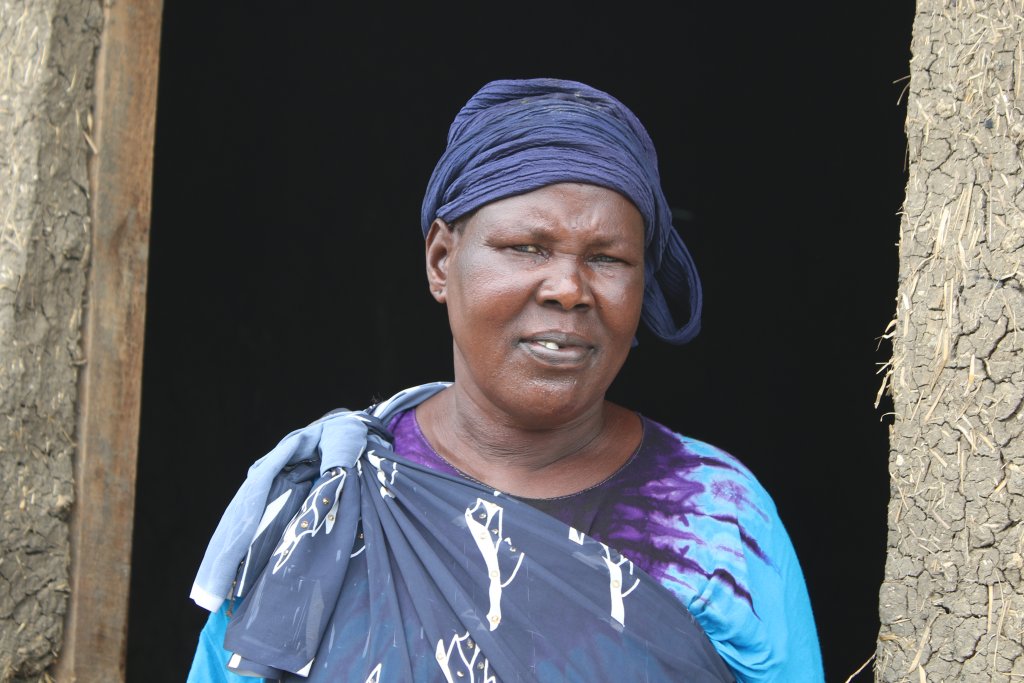
The baker and the nurse return home
For the first time in years, Regina and Nyagiek are looking to their future with optimism, making plans for their children and actively helping their communities.
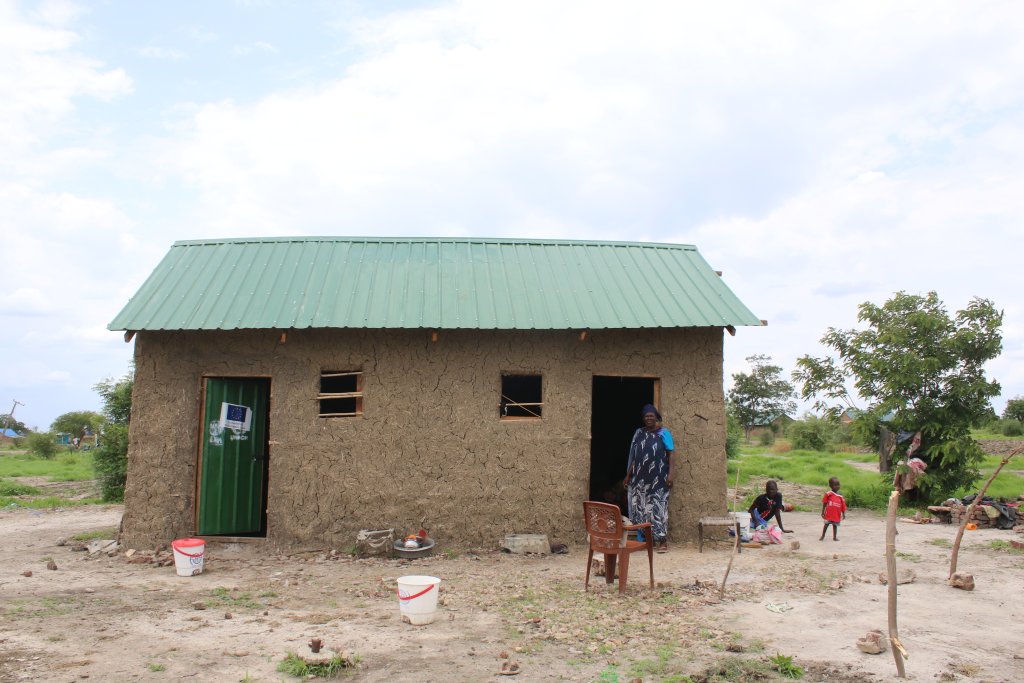
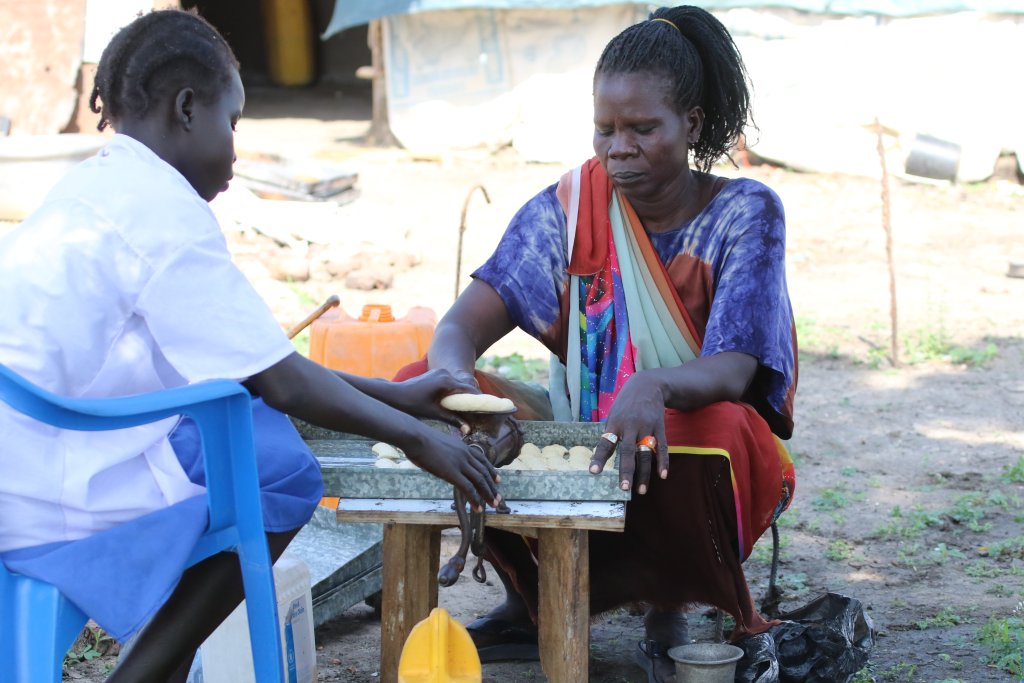
In Hai Matar, Regina prepares cookies every morning outside her new house to sell at the market in town. She made enough profit from one of her earlier batches to buy her children school uniforms. She now wishes to open a cookie shop and serve hungry customers right at home.
Regina’s business is part of a project launched by UNHCR and its partner ADRA in 2026 to support newly returned households in realising their start-up ideas.
With funding from the European Union, the project strengthens livelihoods, including farm cooperatives, small businesses and start-ups, through cash disbursements, supplies and technical expertise on running and maintaining a business. Under the programme, two women’s groups in Hai Matar and Hai Luakat received cooking kits.
When not enjoying the smell of fresh cookies, Regina’s nephew and three children go to the nearby Joshua Primary School, once damaged in conflict and now rehabilitated by UNHCR.
A short walk away in Hai Luakat, Nyagiek gets ready in the morning to go to work at the Malakal Teaching Hospital. She shares her new home with her four children, nephew and ageing mother.
“We need good conditions that enable communities to do their job. Even when I was in Sudan during times of no violence, the memories of Hai Luakat always stayed with me. I am so thankful that my house was rebuilt,” shares Nyagiek.
So far, more than 565 houses have been constructed on Government-allocated land under the Upper Nile Durable Solutions Roadmap. Of these, 268 are in Hai Matar, with potential for 2,733 additional plots, and 94 are in Hai Luakat, with potential for 1,837 additional plots.
The road ahead
Building on this progress, in 2026, the Government and UN committed to extending the roadmap for another two years, under the leadership of the UN Resident and Humanitarian Coordinator. Coverage will expand to all counties in the state, including solutions strategies for refugees in Maban and Renk.
According to an intention survey conducted by IOM’s Displacement Tracking Matrix in June, only four per cent of people expressed a desire to stay in the former PoC site. As many as 66 per cent of internally displaced people want to return to their place of origin, while 24 per cent wish to relocate.
However, without sustained collective will and funding, progress towards self-reliance risks stalling amid a sharp decline in humanitarian assistance since 2025.
At the national level, the Government of South Sudan, UN and partners have set a shared goal of supporting 60,000 displaced people across the country to achieve viable solutions by the end of the year.
Like Regina and Nyagiek, those 60,000 people are nurses, mothers, entrepreneurs, siblings and children, not seeking handouts or permanent dependence on aid, but viable options towards a self-sustaining future wherever they call home.
Please visit the UN team's website for more information about the UN's work in South Sudan.





Latest news and updates