Transforming Food Systems in Timor-Leste: From Fields to Families to Sustainability
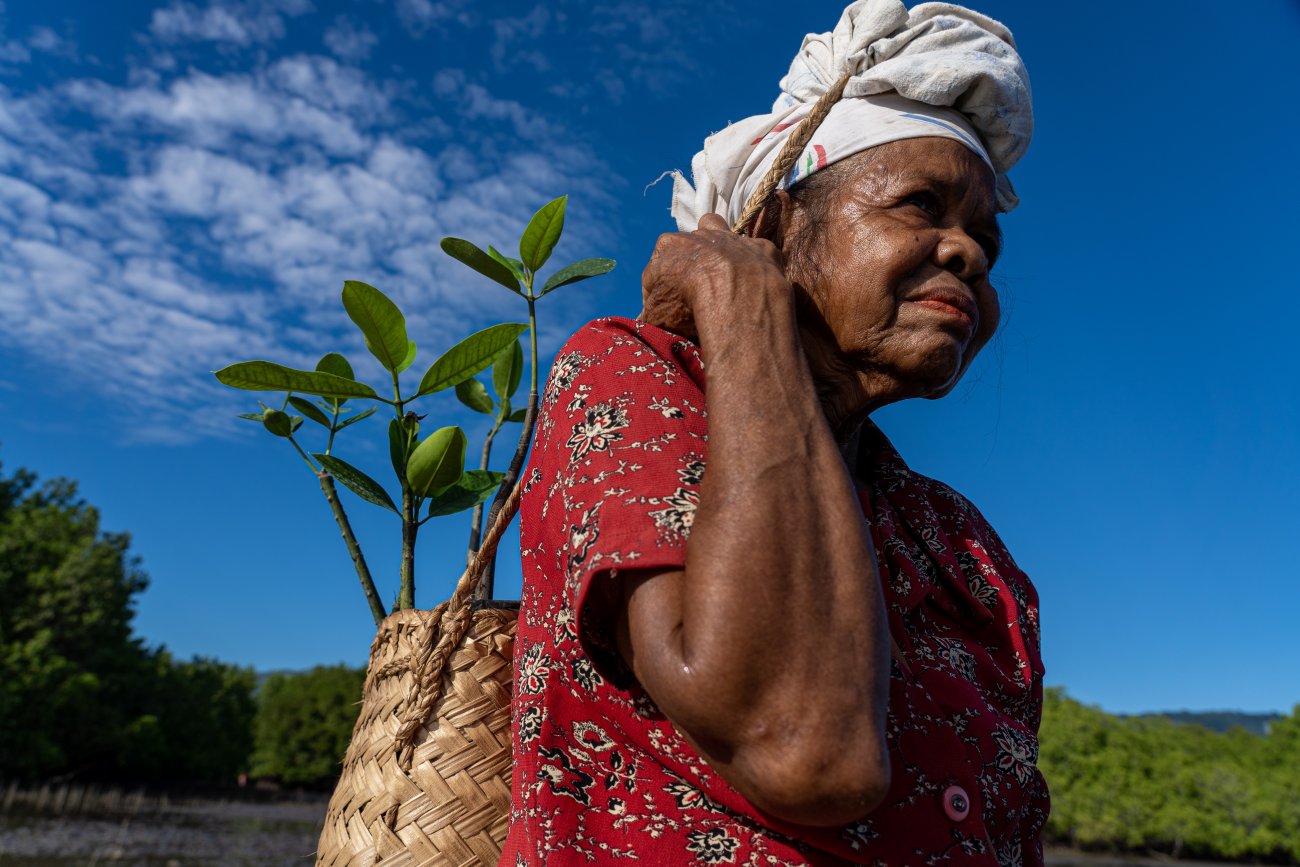
Land preparation for rice cultivation has been among the most costly and labour-intensive stages of agricultural production in Timor‑Leste. High labour costs, unpredictable weather and limited access to modern technology have long defined the reality for rural farming families.
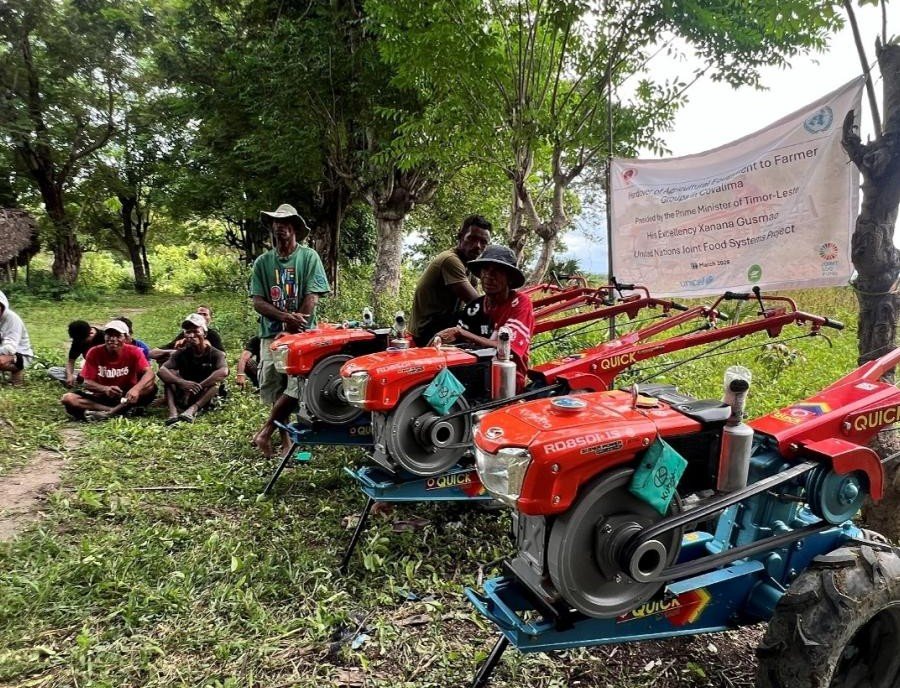
Access to equipment and modern farming methods had until recently been only a dream for farmers from across Covalima and Zumalai Administrative Posts. But no longer. Earlier this year, 28 farmer groups, representing 560 farming families, including 130 women-headed families, received newly procured hand tractors as part of a United Nations-supported project.
“These tractors help us start planting earlier and reduce expenses,” says farmer group coordinator Armando Soares.
The story and its significance go beyond tractors; it is about transforming an entire food system. The hum of the engines in Covalima marked the start of a journey on how food is produced and sold, as well as how it is consumed, governed and valued.
From tractors to markets
Farmers had historically not invested in expanding their production due to uncertain market conditions: could they sell their products and at what price? “We used to mostly sell to our neighbours,” Mr. Soares says. “We did not have access to formal markets.”
This is why the joint programme between the Government of Timor-Leste and the United Nations looks at the issue in a holistic manner that addresses both supply and demand, explains Funmi Balogun Alexender, the Resident Coordinator of the United Nations in Timor-Leste. Providing inputs along with market access minimises the risk of investing in productivity gains that farmers themselves do not yet perceive as economically valuable or demand driven.
“There is a paradox: our farmers have the capacity to produce more, yet there is food insecurity, widespread child malnutrition and reliance on imported food,” says Lino Magno, Director of Agriculture Services, Covalima municipality. “Productivity and market access must advance in tandem.”
In Covalima, Senior Extensionist Quintino Gusmão da Cruz has witnessed these challenges for years.
“Farmers can produce in large quantities, but without reliable markets, there is little incentive to do so,” he says. “That’s why many young people leave rural areas to seek work elsewhere. Imports and unstable prices make it very difficult for farmers to benefit from their own labour.”
Women and young children are particularly affected. Poor dietary diversity, limited nutrition knowledge and inadequate access to nutritious foods continue to drive chronic malnutrition and stunting, undermining children’s development and the country’s long‑term human capital.
Launched in May 2025 and funded by the Joint SDG Fund, the Food Systems Transformation Project in Timor‑Leste is part of a global effort to support countries in implementing their National Food Systems Pathways.
Under the coordination of the UN Resident Coordinator and leadership of the Vice Prime-Minister and Coordinating Minister for Social Affairs, the project is implemented by the Food and Agriculture Organization of the United Nations (FAO) and the United Nations Children’s Fund (UNICEF), in collaboration with the Ministry of Agriculture, Livestock and Fisheries, two pilot municipalities (Covalima and Viqueque) and in close partnership with the National Council for Food Security, Sovereignty and Nutrition in Timor-Leste (CONSSAN‑TL) as the National Food Systems convener.
The Joint SDG Fund’s support plays a catalytic role in providing flexible financing that connects and coordinates an enabling policy environment for investments, agricultural innovation, nutrition and market development. This approach brings these elements together into one coherent national effort, ensuring that improvements on the farm are matched by opportunities to sell, earn, eat well and thrive.
Market linkages include engaging with the public and private sector to increase demand for locally-grown produce, supporting farmer groups to connect with buyers and contributing to a broader policy dialogue on how to stabilise and expand market opportunities for smallholder farmers.
“What distinguishes this initiative is its whole‑of‑system design,” says Komar Mendonca, the Executive Director of CONSSAN-TL.
The Joint SDG Fund supports long‑term investment planning, cross-sectoral coordination, policy coherence and the mobilisation of public, private and blended finance. It reflects the vision of the United Nations Cooperation Framework: a nationally-owned mechanism capable of sustaining food systems transformation well beyond individual projects or donor cycles.
Innovation, climate resilience and reduced dependency
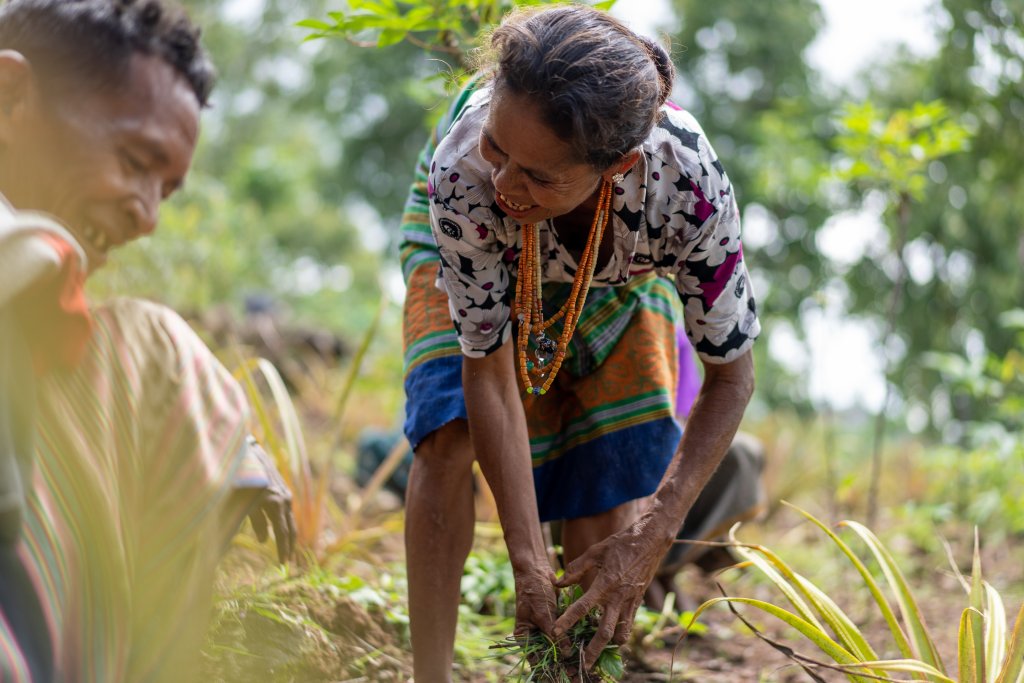
Under the project, FAO is integrating climate‑smart agriculture, soil conservation and organic inputs with local knowledge – strengthening resilience in a country increasingly affected by erratic rainfall and extreme weather events, while also decreasing reliance on imported fertiliser.
Demand-side interventions include strengthening public procurement of local produce, establishing more reliable buyer-farmer linkages (such as Merenda Escolar, a school feeding programme) and contributing to policy frameworks that create stable and predictable demand for smallholder output. These interventions also involve identifying opportunities for investments in food systems through pipelines of bankable and marketable projects.
At the same time, UNICEF is leading efforts on nutrition and consumption with particular attention to pregnant women, lactating mothers, infants and young children.
This includes promoting breastfeeding, improving complementary feeding practices, strengthening community awareness, training health workers and supporting home gardening and dietary diversification.
Ensuring adequate nutrition for children is not only a health priority. It is a cornerstone of national development, with lasting implications for education outcomes, workforce productivity and long‑term economic growth.
A national transformation taking root
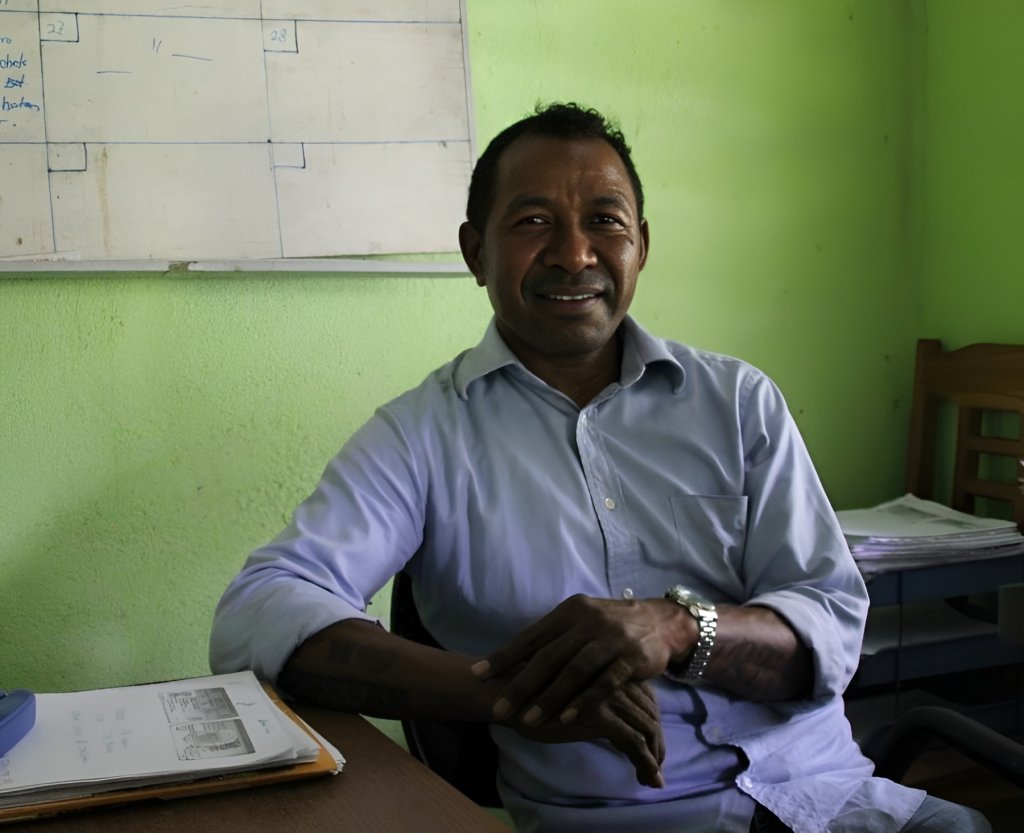
If this momentum is sustained and if the link between investments, productivity and market access is strengthened, Timor-Leste stands to achieve stronger agricultural productivity, improved rural livelihoods, better nutrition outcomes and a more resilient, self-reliant food system, says Funmi Balogun Alexander, United Nations Resident Coordinator in Timor-Leste.
“The lesson from the field is clear: transformation requires listening to farmers, understanding what they value and building systems that work for them – not just around them,” she says.
The tractors delivered in Covalima are an early and promising sign of this shift. What is unfolding is a national transformation, Government-led, UN-supported and enabled by the Joint SDG Fund, rooted in a simple yet powerful belief: when food systems truly transform, lives transform.
Note:
All joint programmes of the Joint SDG Fund are led by UN Resident Coordinators and implemented by the agencies, funds and programmes of the United Nations development system. With sincere appreciation for the contributions from the European Union and Governments of Belgium, Denmark, Germany, Ireland, Italy, Luxembourg, Monaco, Kingdom of the Netherlands, Norway, Poland, Portugal, the Republic of Korea, the Kingdom of Saudi Arabia, Spain, Sweden, Switzerland and the Arab Gulf Programme for Development for a transformative movement towards achieving the SDGs by 2030.
This story was originally published by the UN team in Timor-Leste. Please visit the UN team's website for more information about its work in Timor-Leste.





Latest news and updates