Turning Climate Promises Into Action Starts With People: Lessons From Mexico
Mexico’s updated climate plan shows how public participation, national leadership and coordinated technical support can help translate ambitious commitments into action.
Turning climate ambition into tangible results remains one of the greatest global challenges, as highlighted by UN Secretary-General António Guterres. In Mexico, a coordinated effort led by the UN Country Team (UNCT) is helping bridge that gap, supporting the Government to design and now implement a more ambitious, inclusive and actionable Nationally Determined Contribution (NDC 3.0)*.
“Mexico’s experience shows that when strong national leadership is matched with inclusive processes and coordinated UN support, ambitious climate commitments can move from paper to practice, turning climate action into real results,” said the UN Resident Coordinator in Mexico, Allegra Baiocchi.
Over the past year, the UNCT in Mexico has accompanied the Government, particularly the Secretariat of Environment and Natural Resources (SEMARNAT), in updating its NDC as part of the global Climate Promise initiative under the Resident Coordinator's convening leadership and the UN Development Programme's (UNDP) technical leadership.
What emerged is not just a revised climate plan, but a strengthened national roadmap aligned with the Paris Agreement and the 2030 Agenda, one that:
- raises ambition on mitigation and adaptation
- introduces a dedicated component on loss and damage**
- integrates gender equality and human rights
- strengthens youth participation and social inclusion
Putting participation at the centre
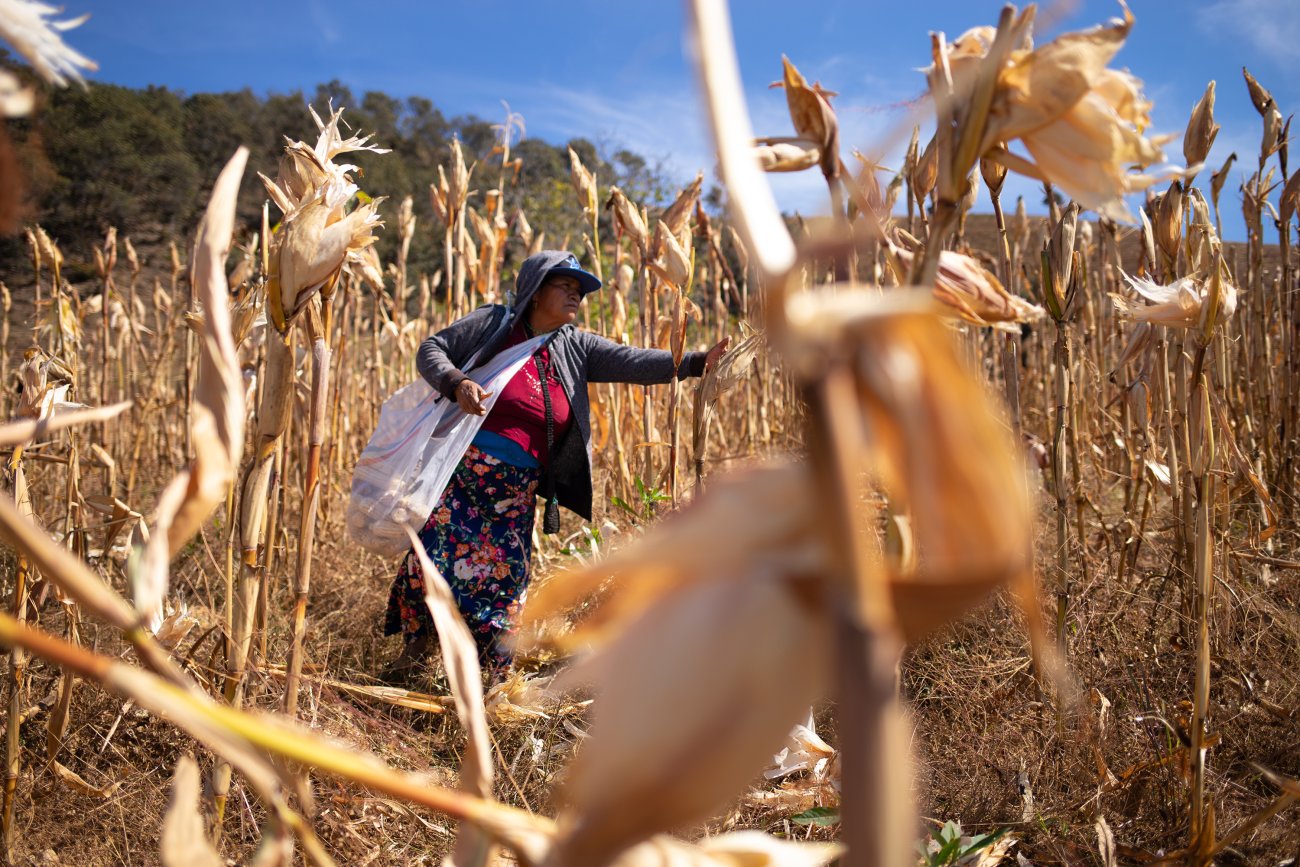
A defining feature of Mexico’s NDC 3.0 is its participatory nature. Through workshops, consultations and open surveys, a whole-of-society approach ensured that diverse perspectives shaped the country’s climate commitments. It also strengthened transparency, ownership and public trust, essential conditions for effective implementation.
UN agencies played a key role in ensuring inclusion. The UN Children’s Fund (UNICEF) supported consultations with children and youth; the International Organization for Migration (IOM) and the UN Refugee Agency (UNHCR) contributed technical expertise to incorporate human mobility and displacement into adaptation and loss and damage frameworks, areas increasingly central to climate resilience.
At the same time, the UN Development Programme (UNDP) supported the development of national biodiversity targets aligned with global frameworks, while the broader UN system ensured that gender equality, human rights and social inclusion were embedded throughout.
The result is a climate plan grounded not only in science, but in the lived realities and priorities of people across Mexico.

Communications: Sustaining momentum for climate action
Strategic communications have played a critical role in shaping public understanding, strengthening trust and enabling the behavioural shifts needed to deliver results.
Joined-up UN efforts are strengthening the quality and coherence of climate coverage and helping position climate action as a national priority. In May, the UN Information Centre (UNIC) led a media workshop convened by SEMARNAT, with support from UNDP, the UN Environment Programme (UNEP) and the UN Framework Convention on Climate Change (UNFCCC), with more than 53 media outlets participating.
Communications also played a catalytic role in shaping public narratives by utilising global moments to draw attention to national priorities. For example, UN Secretary-General António Guterres' climate address, “Moment of Opportunity,” generated over 30 media articles and reached more than 34 million people.
Another key milestone was Mexico’s first-ever Climate Week in 2025, where the UN mobilised a coordinated, multi-agency presence. Ten UN entities, UNDP, UNEP, the Food and Agriculture Organization (FAO), UN Women, IOM, UN-Habitat, the Economic Commission for Latin America and the Caribbean (ECLAC), the Resident Coordinator’s Office, UN Industrial Development Organization (UNIDO), UNIC and partners, engaged across thematic dialogues, public events and joint communications. Together, these efforts reached more than 7 million people, reinforcing climate action as a shared national priority and sustaining public engagement beyond policy processes.

A coordinated UN system, a stronger national plan
Mexico’s NDC 3.0 stands as a clear example of the value of system-wide UN coordination. Under the leadership of the Resident Coordinator’s Office, the UNCT mobilised a unified, integrated offer of support, aligning technical, financial, policy and communications expertise across more than a dozen entities.
Ten UN entities jointly identified over 80 actions to strengthen climate governance, align national strategies, mobilise finance and accelerate implementation. This coordinated approach reinforced coherence between environmental policy, national development planning and international commitments, ensuring that climate action contributes directly to sustainable development outcomes.
The result is a more ambitious, credible and investment-ready climate plan, positioning Mexico as a regional reference for rights-based and inclusive climate action.
From policy to practice: the implementation challenge
While the development of NDC 3.0 marks a major milestone, the real test lies ahead in its implementation. Mexico’s updated NDC outlines a transformative agenda across sectors, from water security and ecosystem restoration to energy transition and urban resilience. Delivering on these commitments will depend not only on policy frameworks and financing, but also on how institutions, markets and individuals respond.
This is where the UN is bringing new tools to the table, supporting Mexico to apply behavioural science to accelerate implementation. By understanding how people perceive risks, respond to incentives and make decisions, behavioural insights can help close the gap between policy ambition and real-world action.
“In areas such as water use, energy adoption and community-based ecosystem management, small shifts in behaviour can unlock significant impact,” noted Allegra Baiocchi. “By improving communication, strengthening coordination and addressing bottlenecks, these approaches can enhance the effectiveness and cost-efficiency of climate policies.”

A model for multilateral impact
Mexico’s NDC 3.0 demonstrates what is possible when national leadership and multilateral cooperation align around a shared vision. As countries implement increasingly ambitious climate commitments, Mexico’s experience highlights what works: coordination across the UN system to amplify impact, inclusive participation to strengthen credibility and ownership, integrated policy, communication and behavioural insights to accelerate implementation.
Frequently Asked Questions
* What is a Nationally Determined Contribution?
An NDC, or Nationally Determined Contribution, is a country’s climate action plan under the Paris Agreement, a global agreement to reduce emissions and limit climate change.
Each NDC explains what a country will do to cut greenhouse gas emissions and prepare for climate impacts.
NDC 3.0, or NDC 3, is the third and latest round of these plans, with stronger targets than previous versions. (UNFCCC)
** What is a loss and damage component in an NDC?
A loss and damage component in an NDC is a section of the plan that focuses on climate-related harm that can no longer be avoided or has already happened despite adaptation and mitigation efforts, such as homes lost to flooding or farmland damaged by drought. (UNEP)
Please visit the UN team's website for more information about the UN's work in Mexico.





Latest news and updates