Cities are Where Sustainable Development Comes to Life
How Resident Coordinators are turning global commitments into local action
As Member States prepare to review progress on the New Urban Agenda, DCO Regional Director for Europe and Central Asia Gwi-Yeop Son, and UN-Habitat Regional Director for Eastern Europe and Central Asia Erfan Ali, explore how Resident Coordinators are helping connect global commitments on housing, resilience and sustainable cities with practical action in people’s daily lives.
A lesson from Konya
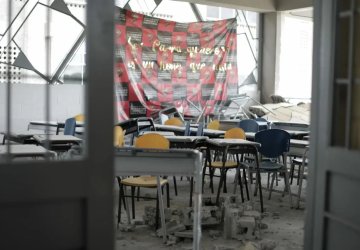
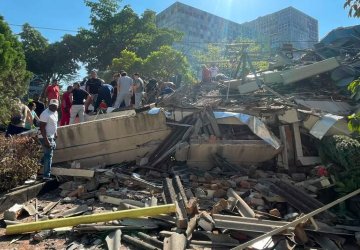
When the Mayor of Konya reflected on the devastating earthquakes that struck Türkiye in 2023, he did not begin by talking about buildings. He spoke about a choice. The disaster exposed the vulnerabilities of cities, but it also created an opportunity to rethink how communities are planned and rebuilt. Housing, he argued, cannot be treated as a construction project whose sole purpose is to provide shelter. It must be designed as part of an integrated system because it shapes whether children can safely reach school, whether older persons can access healthcare, whether jobs are within reach and whether families are protected from climate shocks. Cities are indeed the place where the Sustainable Development Goals (SDGs) come to life.
Why now?
That message reflects a global reality. Today, more than 2.8 billion people still lack adequate housing, over one billion live in informal settlements and more than 300 million experience homelessness.
This is why cities matter. Nearly 58 per cent of the global population lives in urban areas, and around 65 per cent of all SDG targets require action and implementation at the local and subnational levels. Cities are where policies, investments and institutions intersect with people’s daily lives.
Yet cities cannot deliver on this promise alone: Barriers include fragmented policies across sectors and governance levels, insufficient and unsustainable financing for city administrations, gaps in reliable data for evidence-based decision-making and constrained local capacities.
These challenges, and the opportunities to overcome them, were at the heart of the 13th World Urban Forum (WUF13), held in Baku, Azerbaijan, from 17 to 22 May.
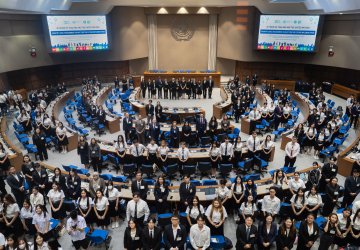
Under the theme “Housing the world: Safe and resilient cities and communities,” WUF13 brought together more than 57,000 participants from over 176 countries, including governments, development partners, financial institutions, local authorities, academia, civil society and communities. The forum set the stage for the High-Level Meeting of the UN General Assembly on the New Urban Agenda, marking the midpoint of the global framework adopted in 2016 to guide sustainable urban development.
What are UN Resident Coordinators doing?
At the One UN Roundtable with other senior UN officials, international financial institutions, and national and local leaders, UN Country Teams (UNCTs) and a delegation of 11 Resident Coordinators (RCs) highlighted how they are increasingly using housing and sustainable municipal development as entry points for broader prosperity.
1) Policy coherence:
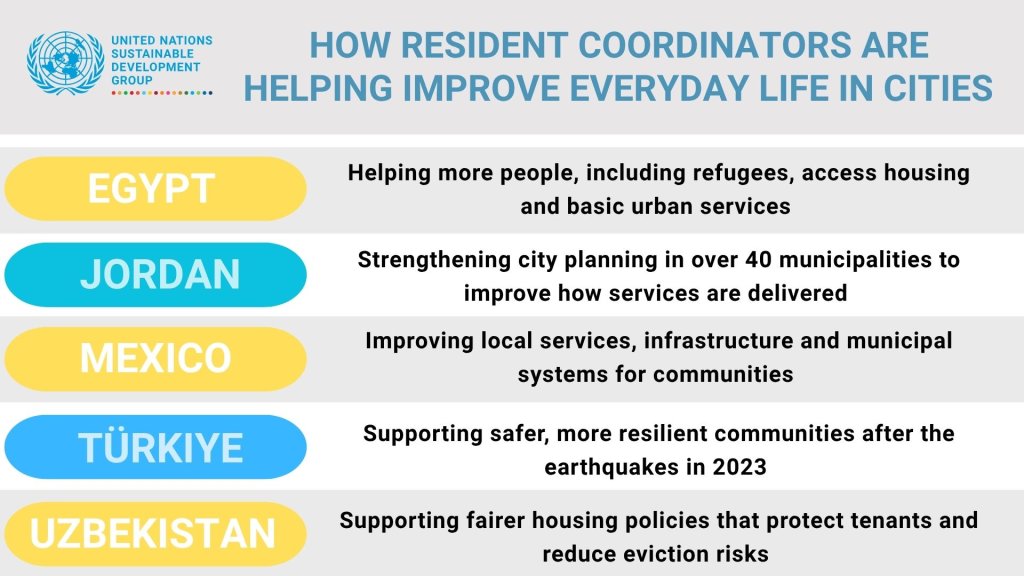
By convening partners to align national priorities, global commitments and local action, RCs are helping transform fragmented efforts into scalable development strategies, as well as clarifying roles and responsibilities. In Egypt, UN support has contributed to national and local plans that expand access to urban housing and services, including for refugees.
In Uzbekistan, with the UN Special Rapporteur on the Right to Adequate Housing, the UNCT is working with the Government to align housing policies and legal frameworks with human rights, labour standards and social protection principles, such as tenant protection laws and measures against eviction.
2) Unlocking financing for cities:
RCs are supporting national partners in developing investable projects, accessing innovative financing mechanisms and investment opportunities, and strengthening subnational budgeting and planning systems. In Jordan, collaboration with the Cities and Villages Development Bank is enhancing urban services and infrastructure, municipal revenues and local governance, while aligning cities’ development with human rights.
Furthermore, the Joint SDG Fund and the Local2030 Coalition are working with UNCTs to support national and local partners in building new investment opportunities, aiming to unlock significant co-financing to locally implement the SDGs. For example, in 2025, working with over 189 subnational governments across 36 countries, joint programmes funded by the Joint SDG Fund unlocked $43 million in additional resources and catalysed the adoption of over 102 policies and strategies for local SDG action.
3) Investing in local capacities:
Strong local institutions and skilled personnel are critical to implementing sustainable urban solutions. In Mexico, coordinated efforts have strengthened planning capacity across more than 40 municipalities, benefiting over 3,000 municipal officials, urban planners and practitioners. In Türkiye, post-earthquake recovery efforts are supporting a resilient future through investments in seismic resilience.
Building on last year’s financial mobilisation, the Joint SDG Fund and the Local2030 Coalition convened local and national governments, donors, financial institutions, investors and UN agencies at the Bilbao Bootcamp. The second edition of the Bootcamp this year successfully developed 12 joint programmes to build local capacities that generate breakthrough partnerships and financial innovations — bringing countries, investors and partners together to move from design to a pipeline of new and funded opportunities.
Turning global commitments into local results
The outcome of WUF13, captured in the “Baku Call to Action,” underlines a simple but urgent truth: Housing must move from the margins of development policy to the centre of sustainable development.
Achieving this requires:
- Stronger multi-level governance and coordination
- Scaled-up investment in cities and housing
- Integrated policies across sectors and institutions
- Partnerships that bring together governments, the UN system, international financial institutions, the private sector and local communities
The lesson from Türkiye presented by the Mayor of Konya is one that extends far beyond one city or one disaster. Building resilience is not only about constructing stronger buildings. It is about creating communities where people can thrive — where housing connects people to opportunity, services and a better future. If we want the SDGs to succeed, cities are where that success will ultimately be measured.
Building on the momentum of WUF13, the UN Resident Coordinator System, together with UN-Habitat and other partners, is committed to offering a network for stakeholders to collaborate and collectively deliver the outcomes of these global dialogues.





Latest news and updates